OEM vs ODM Furniture: Which Model Does Your Order Need?
OEM means the factory builds your drawings; ODM means you adapt a design the factory already owns. The difference decides who owns the design, what you pay up front, and how fast you reach production.
On this page
- Why Does the OEM or ODM Choice Shape Your Whole Order?
- What Does OEM Actually Mean in Furniture?
- What Does ODM Actually Mean?
- OEM vs ODM: Which Should Your Order Use?
- Where Does Each Model Fit — and Can You Mix Them?
- How Can You Tell Whether a Factory Can Really Handle OEM?
- What Must Go Into the Agreement?
Almost every sourcing conversation reaches the same fork: are you buying the factory’s design, or is the factory building yours? Buyers often treat OEM and ODM as two words for “custom furniture”, but they describe opposite commercial arrangements. One decides who owns the design; the other decides who carries the development cost. Get it wrong and you can spend a year developing a product you do not actually own.
Why Does the OEM or ODM Choice Shape Your Whole Order?
Because the model you choose fixes four commercial variables before a single board is cut: who owns the design, how much cash leaves your account before production, how quickly the first container ships, and whether a competitor can legally sell the same piece next season.
Everything else — unit price, MOQ, tooling, sampling rounds, QC intensity — flows from those four. That is why the question belongs at the very start of a conversation, not after the first quotation arrives. A factory pricing an ODM programme is selling you access to engineering it already paid for; a factory pricing an OEM programme is selling you production capacity and engineering time. Those are different products, and a supplier who does not know which one you are asking for will give you a number that does not mean much. Whichever model you choose, the quotation itself is only the first line of the real cost — see how to calculate furniture landed cost for the full formula.
What Does OEM Actually Mean in Furniture?
OEM means you own the design and the factory manufactures it — you supply drawings and specifications, and the factory’s job is precision production against them.
In a genuine OEM arrangement the buyer provides a drawing package complete enough to quote from: dimensions with tolerances, timber species and grade, construction method, hardware part numbers, finish specification and packaging. The factory contributes process knowledge — how to hold a tolerance across a batch, which joint will survive your climate, how to sequence the finishing line — but not the design itself.
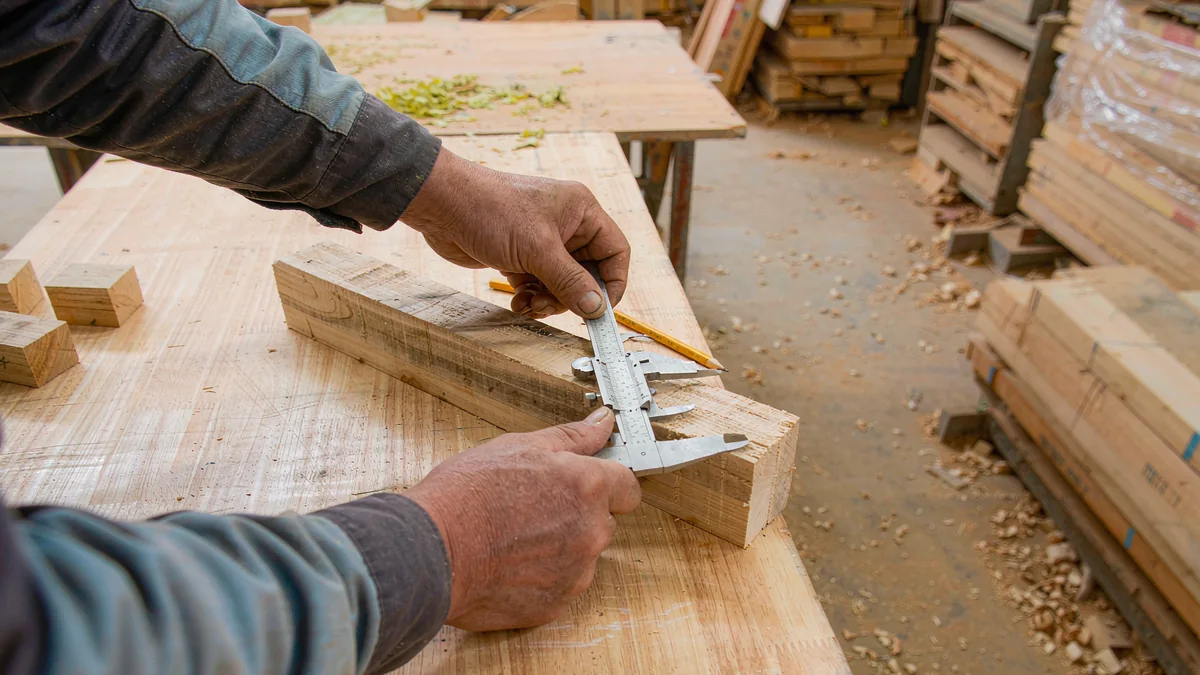
What you gain is ownership and control: you can move production later, you can license or sell the design, and no competitor can order the same piece. What you pay for is development — engineering time, first-sample cycles, occasionally new jigs or tooling, and testing. And what you must supply is clarity: the two most common causes of OEM delay are a missing tolerance scheme and a finish defined only by a photograph.
For solid wood specifically, add two clauses that most drawing packages omit: timber species and grade (naming the species without the grade is not a specification) and target moisture content for your destination climate, typically 8–12%. Both are covered in more detail in what furniture is actually made of.
What Does ODM Actually Mean?
ODM means the factory owns a base design and you adapt it — you select from an existing product platform, then change dimensions, timber, finish, upholstery, hardware and branding.
This is the model most buyers actually start with, whether they call it that or not. A factory with a mature catalogue has already solved the engineering: the frame has been prototyped, the joinery proven, the finishing recipe written, the packaging tested. Your changes sit on top of that foundation rather than replacing it.
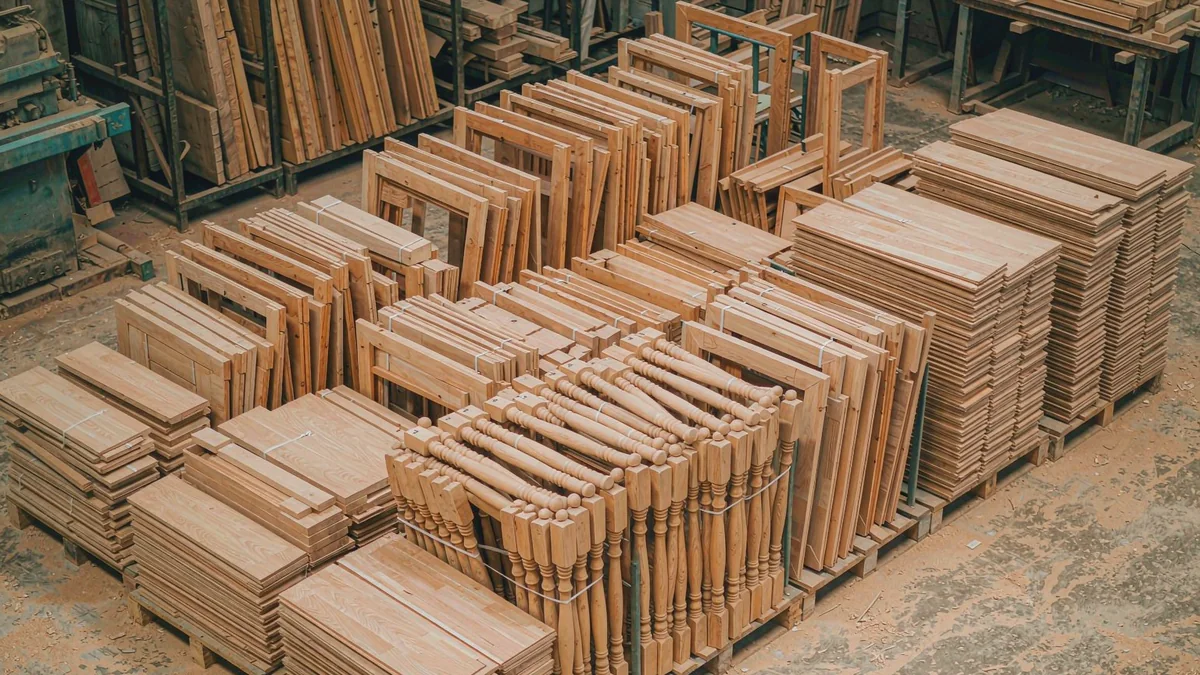
The practical result is speed and low up-front cost: no drawing programme, fewer sampling rounds, shorter path to the first batch. Our own published range runs to more than 500 pieces across bedroom, living, dining and home office, and a typical ODM enquiry starts from one of them — a platform bed, a dining table, a wardrobe — with the size, timber and finish changed to suit the buyer’s market.
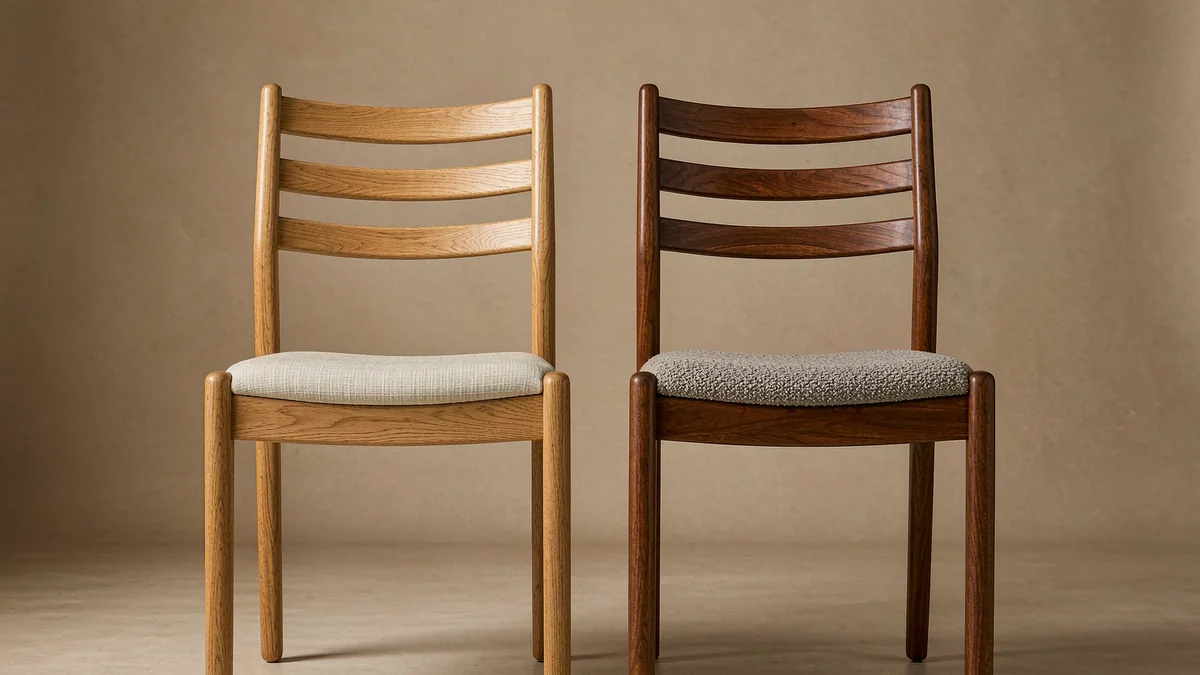
The trade-off is ownership. The base design remains the factory’s, which means it can be sold elsewhere unless you negotiate exclusivity — and even then, exclusivity is normally granted by territory and term, and usually priced.
OEM vs ODM: Which Should Your Order Use?
Choose OEM when the design is your differentiator and you have the budget and timeline to develop it; choose ODM when speed, cash and proven engineering matter more than uniqueness.
| Factor | OEM | ODM |
|---|---|---|
| Design ownership | You | The factory |
| Up-front cost | Higher: drawings, sampling, sometimes tooling | Low: adapt an existing platform |
| Time to first batch | Longer: development precedes production | Shorter: engineering already proven |
| Unit cost | Often lower at volume, after development is recovered | Often higher per unit, no development fee |
| Typical MOQ | Higher — the line is set up for your design | Lower — shared platform economics |
| Exclusivity | Natural, if your drawings are protected | Must be negotiated by territory and term |
| Risk | Specification errors are yours to catch | Base design may appear in competitors’ ranges |
| Best for | Hero pieces, brand-defining products, mature lines | New categories, market tests, volume basics |
One correction worth making: OEM is not automatically more expensive per unit. The unit price follows the specification — a simple OEM piece can cost less than a complex ODM platform. What OEM adds is cost before the first unit, not necessarily cost in each unit.
Where Does Each Model Fit — and Can You Mix Them?
Yes — and mixing is what experienced buyers actually do. A common split is ODM for the volume basics where price competition is fierce and uniqueness adds little, and OEM for the flagship pieces that make a range recognisable.
A useful way to think about it by business stage:
- Testing a category or a market — start with ODM. You learn what sells without paying for drawings that may never reach a second order.
- Building a range with a recognisable identity — move the hero SKUs to OEM. That is where ownership starts paying for itself in margin and defensibility.
- Mature programme — run both deliberately, and tell the factory which is which up front so each programme is priced and scheduled correctly.
The same logic applies by product type. Wardrobes, beds and storage that compete on price are usually ODM; a signature dining table or a branded accent chair is the kind of piece worth owning. This is also where material choice interacts with the model: our ODM adaptations most often run through solid red oak for value and durability, black walnut for premium tone, and white ash for light Nordic ranges.
How Can You Tell Whether a Factory Can Really Handle OEM?
Ask for evidence of engineering discipline, not just photographs of finished furniture — because OEM fails on tolerances and documentation long before it fails on appearance.
Four checks that separate a genuine OEM-capable factory from a workshop that only builds its own catalogue:
- Engineering response. Send one drawing with real tolerances and see what comes back. A capable factory asks about material behaviour, joint method and finishing sequence. A weak one answers only with a price.
- Tolerance discipline. Ask what tolerance band they hold as standard and whether they can measure to it. For solid wood case goods, ±2 mm on overall dimensions and ±1 mm on visible joint gaps is a reasonable expectation — and it should be written, not assumed.
- Sampling capability. Ask how many sample rounds a typical OEM programme needs and who pays for each. A factory that has never done OEM will often promise a perfect first sample, which is a warning rather than a comfort.
- Written QC. Ask to see an inspection report from a previous OEM order. You want measurements against the drawing, not a checklist of ticked boxes.
The broader vetting questions — capacity, real premises, sample-to-bulk consistency — are covered in how to know if a furniture supplier is reliable, and they apply to both models.
What Must Go Into the Agreement?
Five clauses, whichever model you choose — and they matter more under ODM, because the default position favours the factory.
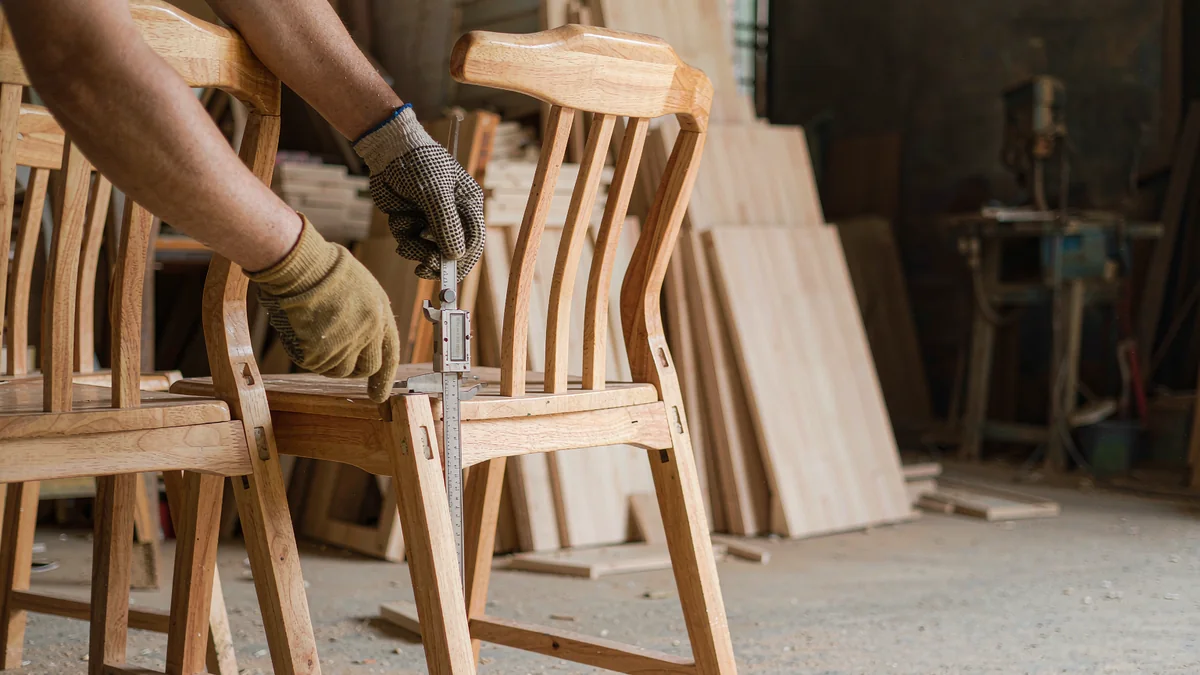
- Design ownership. Under OEM, state that drawings, specifications and any tooling derived from them are yours, that the factory may not produce the design for others, and that files are returned or destroyed at the end. Under ODM, state plainly that the base design remains the factory’s and define exactly what you have adapted.
- Tooling and jigs. Who pays, who owns them, and what happens when the programme ends. This is the clause most often left silent and argued about later.
- Exclusivity. If you need an ODM design held for your market, define territory, term and the volume that keeps it alive. Verbal exclusivity is not exclusivity.
- Substitution rules. The factory must notify you in writing before changing any material, hardware or construction in the approved specification. Silent substitution is the most common source of sample-to-bulk disputes — see why an approved sample does not guarantee production.
- Milestones. Drawing submission, sample ready, sample approval, production start, delivery date — with a short written update at each. Factories prioritise programmes with visible dates, because a missed date then has a consequence.
Do this and the OEM-or-ODM question stops being a semantic argument and becomes a commercial decision you can actually price. If you are weighing both right now, the fastest next step is to send us the drawings you have — or, if you have none, tell us which existing piece you want to adapt and we will tell you honestly which route is cheaper for your volume.
Frequently Asked Questions
OEM vs ODM — which is better for my furniture business?
Neither is better in absolute terms; they solve different problems. Choose OEM if you have your own designs, a clear brand identity and the budget for drawings, sampling and testing — you end up owning an asset no competitor can copy. Choose ODM if you need to test a category quickly, work with a smaller budget, or fill volume ranges where uniqueness matters less than price. Most established buyers use both at once, and the healthiest conversation with a factory starts by telling them which programmes are which, because the two are priced and scheduled very differently.
Is OEM always more expensive than ODM?
Not per unit, but it costs more up front. OEM carries development cost: drawings, first-sample engineering, sometimes new tooling or jigs, and testing. Those costs are recovered either as a separate development fee or amortised into the first order. ODM has little or no development cost, because the engineering already exists — but the unit price is usually higher, and exclusivity, if you want it, is a paid add-on. To compare honestly, add development and exclusivity cost to the unit price over your expected first-year volume, then compare total cost of ownership rather than the first quotation.
Who owns the design under an OEM arrangement?
You do, provided the agreement says so. In principle OEM means the buyer supplies the intellectual property and the factory is a production resource. In practice, ownership only exists if it is written down: state that the drawings, specifications and any tooling derived from them are yours, that the factory may not produce the design for anyone else, and that files are returned or destroyed when the programme ends. Without those clauses, a drawing you paid to develop can quietly become a catalogue item sold to your competitors.
Can I get exclusivity on an ODM design?
Yes, but you have to negotiate and usually pay for it. Under ODM the factory owns the base design, so your default position is non-exclusive — the same frame may be sold to other buyers in other markets. Exclusivity is normally granted by territory and by term: for example, one design reserved for your country for twelve or twenty-four months, sometimes tied to a minimum volume. Ask for it in the first conversation, because a factory will price a programme very differently depending on whether it can keep selling the base design elsewhere.
Can I start with ODM and move to OEM later?
Yes, and it is the most common path we see. Buyers use ODM to prove demand in a category with low risk and little up-front cost, then invest in OEM development once volumes justify it and differentiation becomes the thing that protects margin. Tell the factory that this is your intention at the start, so the ODM agreement does not contain terms — such as sweeping rights over adaptations — that block the later switch. Keep records of which changes you specified, because those adaptations are often where your own design contribution begins.
What do I need to give a factory for an OEM project?
A drawing package detailed enough to quote and build from without guesswork: overall dimensions with tolerances, material species and grade, construction method, hardware part numbers, finish specification with a colour reference, and packaging requirements. For solid wood, also state the target moisture content for your destination climate, typically 8–12%. The two most common causes of OEM delays are a missing tolerance scheme and a finish specified only as a photograph. If you do not have drawings, say so early — most factories, including ours, can develop them with you, but that is a development programme, not a quotation.
Sources & References
Get a furniture quote
Sourcing solid wood furniture for your market? Send us your drawings, target quantities, and destination port — we will reply with pricing, MOQ, and lead time.