What Happens After You Place a Restaurant Furniture Order?
Coordinating 20+ restaurant furniture items across several suppliers into two 40HQ containers means managing QC, packing, and consolidated shipping — the work buyers rarely see.

On this page
- Why “Finding the Product” Is Only the First Step
- Step 1 — Coordinating Several Specialist Suppliers
- Step 2 — Checking Every Item Against the Order List
- Step 3 — Organizing and Packing Before Loading
- Step 4 — Consolidating Everything Into One Shipment
- What Buyers Actually Find Hardest
- The Real Job of a Sourcing Partner
The order is the easy part. For one recent restaurant project we coordinated more than 20 furniture items across multiple product categories and suppliers — roughly two 40-foot-high-cube (40HQ) containers of goods — and the hard work began only after the purchase orders were signed. The challenge was never finding the right products. It was making sure everything was produced to specification, checked, sorted, and shipped as one organized load.
This is the part of furniture sourcing that buyers rarely see, and it is also where most projects quietly succeed or fall apart. Here is exactly how that part of the job gets managed.
Why “Finding the Product” Is Only the First Step
Most people picture furniture sourcing as a shopping problem: pick the chair, pick the table, get a price. For a single item that is roughly true. For a restaurant fit-out it is not, because a restaurant is not one product — it is a programme of seating, tables, bars, banquettes, lighting, and dozens of small items that all have to arrive together and agree with each other.
A single 40HQ container holds about 65–68 cubic metres, and a project like this fills two of them. Once you are moving that volume across several manufacturers, the risk is no longer “did we find a nice chair.” The risk is coordination: does every factory understand the same spec, hit the same deadline, and ship into the same load so the client is not standing in an empty restaurant waiting on a missing carton?
That is the work this article walks through — the four steps that turn a signed order into a container at the port.
Step 1 — Coordinating Several Specialist Suppliers
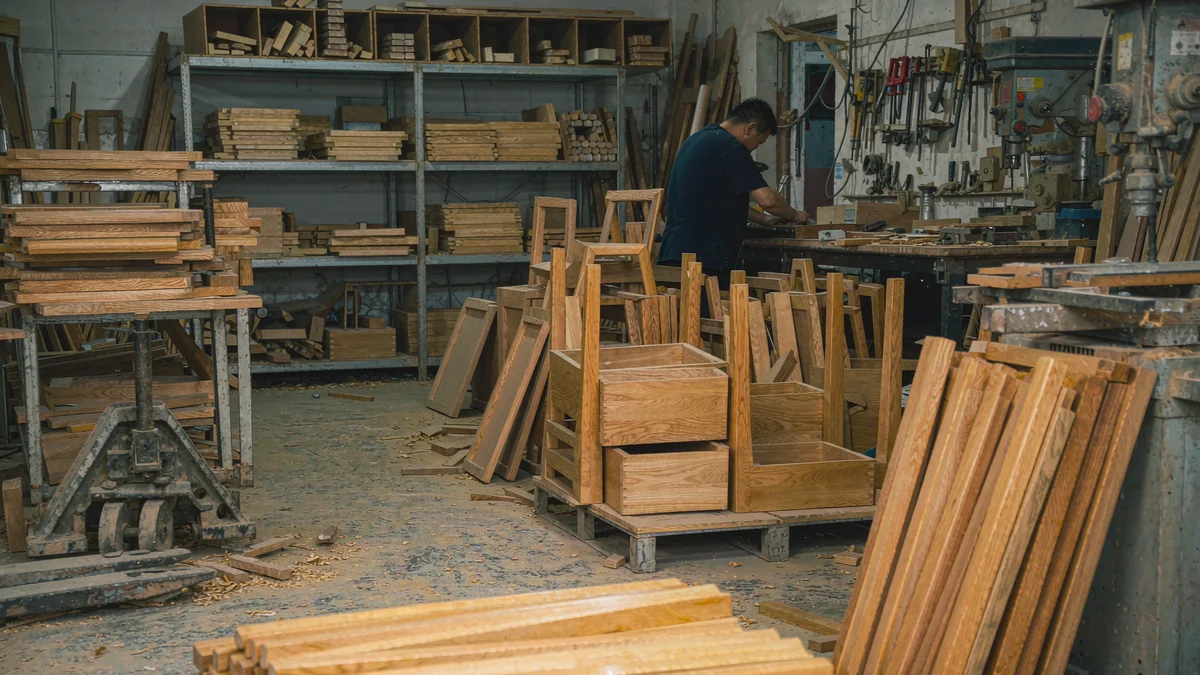
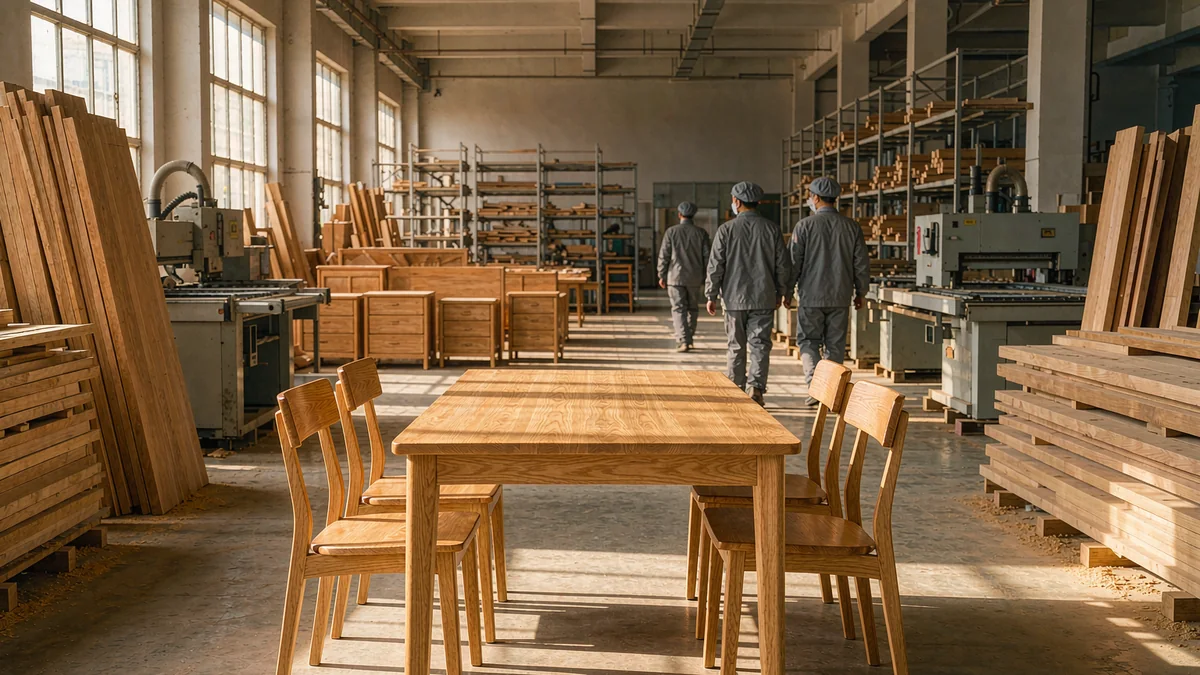
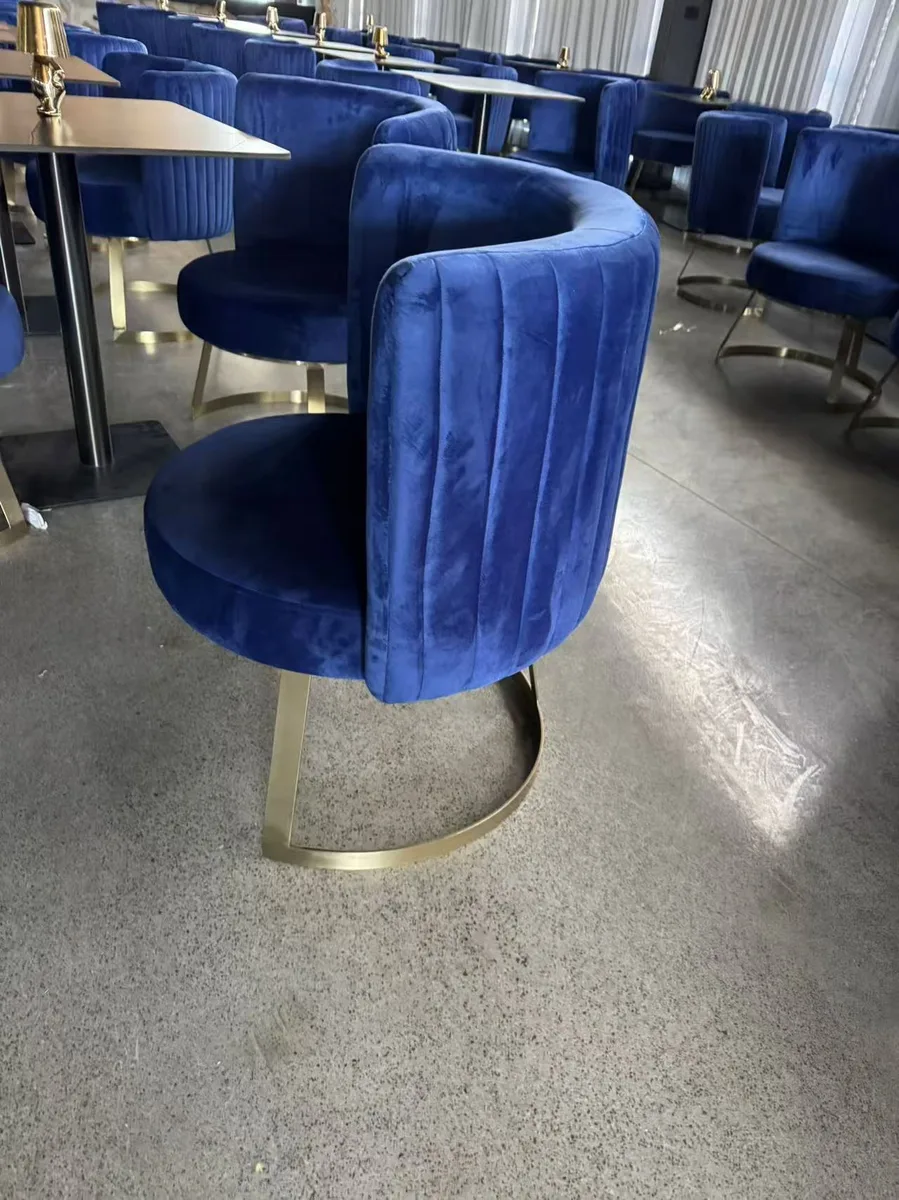
Different products almost always come from different manufacturers. Dining chairs (ash dining chairs and ash dining tables among them), upholstered banquettes, and metal bar bases are different industries, and no single workshop does all of them well. For this project the items were spread across several specialist suppliers, each with its own lead time, material, and production rhythm.
The job in this step is to make those suppliers behave like one team:
- One shared order list. Every factory receives the same document — product, specification, quantity, finish, and deadline — so there is no ambiguity about what “done” means for each line.
- One production calendar. Each supplier’s start and finish dates are mapped against the others, with the slowest item scheduled first so everything converges on the same loading window.
- One owner of the timeline. A single point of contact tracks every milestone and pushes back when a factory slips, instead of letting delays surface at the loading dock.
This is also where a manufacturer with its own sourcing capability helps: when the same team that builds part of the order also coordinates the rest, the communication overhead drops and the accountability stays in one place. If you are evaluating partners, the supplier comparison scorecard we use is a good template for what to ask each factory up front.
Step 2 — Checking Every Item Against the Order List
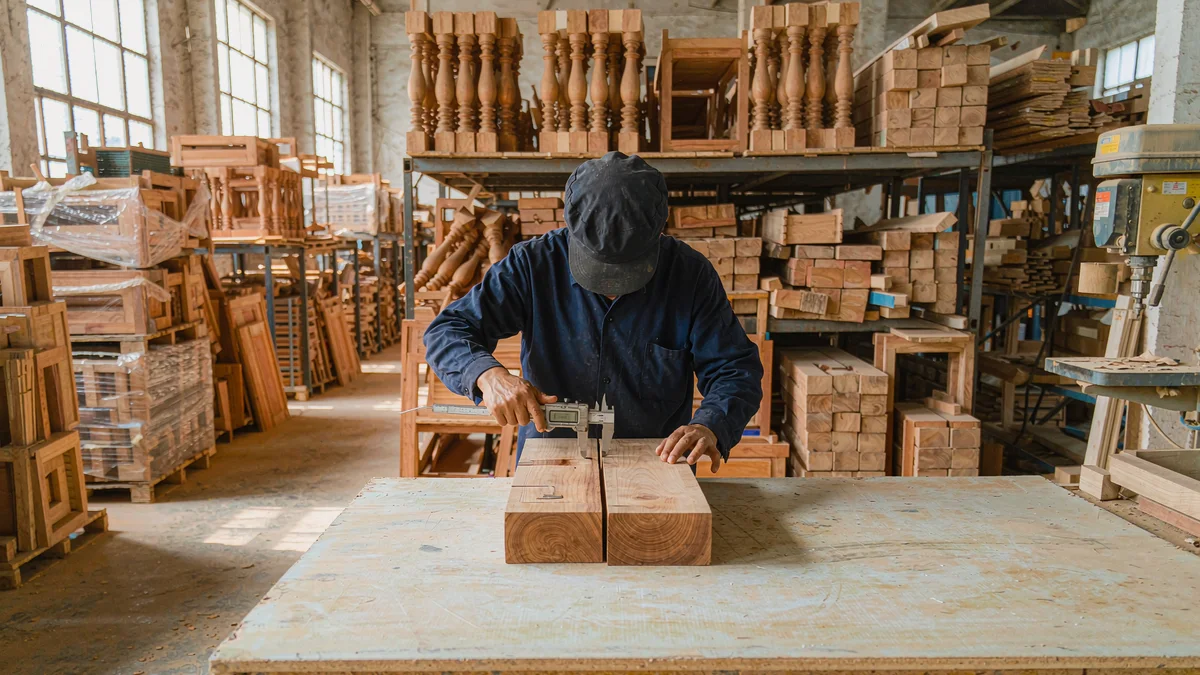
With more than 20 different items, the order list stops being a formality and becomes the spine of the whole project. When products arrive from the suppliers, each line is checked against that list — quantities, dimensions, materials, colours, and any other specification the client agreed to.
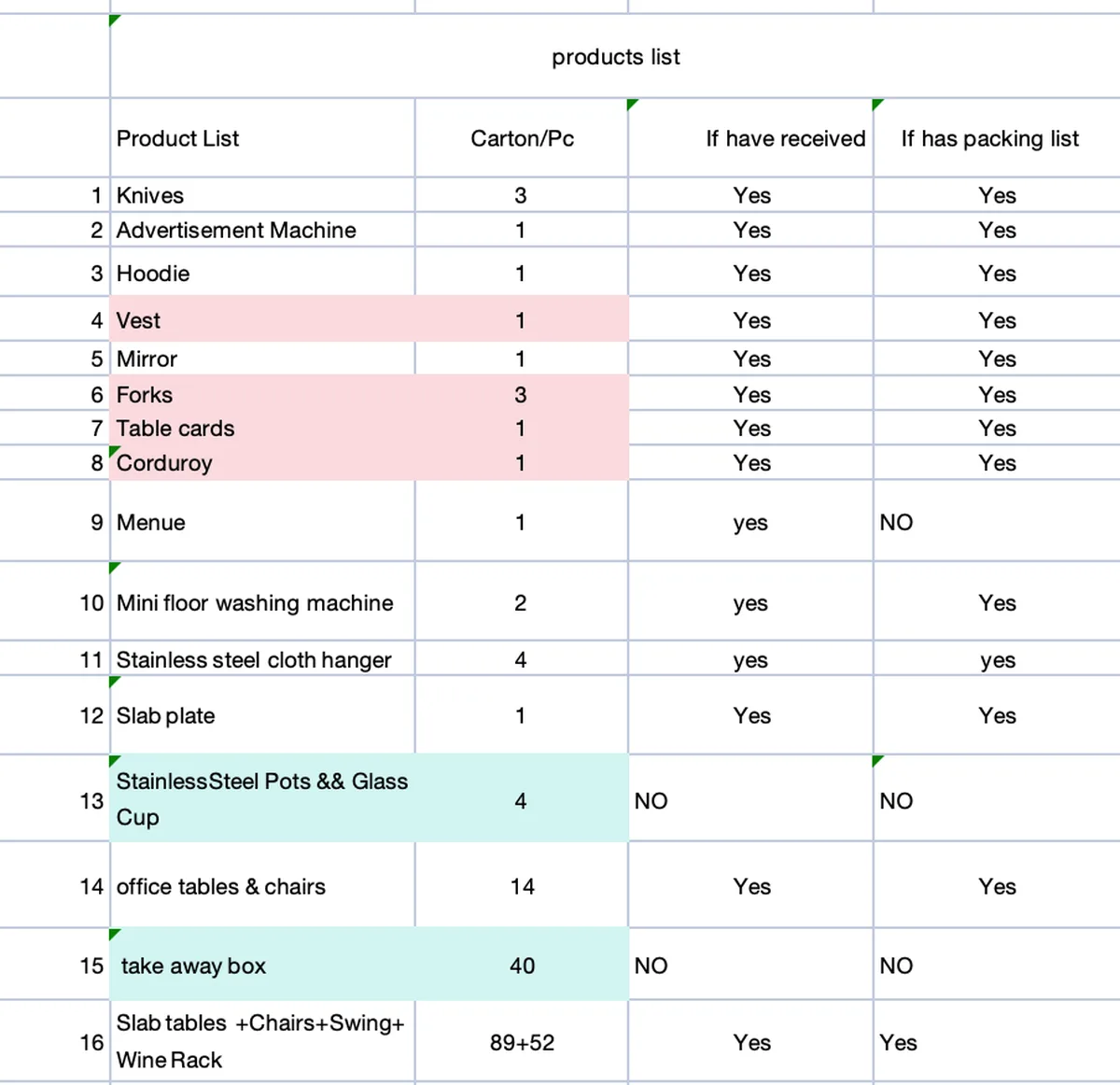
The reason this matters is simple: with 20+ SKUs, even one missing or incorrect product can stall an installation. A restaurant opens on a date, not when the furniture happens to arrive. A missing carton of chair bases, or a batch finished in the wrong colour, is not a small error — it is the difference between “ready” and “delayed by a sea-freight cycle.”
A few things we verify at this stage:
- Quantities against the order, carton by carton, not just “looks about right.”
- Dimensions for items that have to fit a specific space — banquettes against a wall, tables against a clear floor plan.
- Materials and colours against the approved sample — for example the grain and finish on an ash dining chair with vertical slats — because a swatch approved in a showroom can drift in production.
- Documentation, including packing lists, so the container can be checked and cleared without surprises.
This is the same discipline that protects a bulk order after the sample is approved: the approved sample is a reference, not a guarantee, and only inspection holds the specification across the run. It is also where landed cost thinking pays off — a “cheap” line that arrives wrong is the most expensive line in the container.
For contract-grade seating, this step often includes basic structural and finish checks: frame joints under load, upholstery uniformity across the run, and surface flatness on tables. Where a market requires it, fire-retardant treatment for public-space upholstery is confirmed with test evidence before anything is packed.
Step 3 — Organizing and Packing Before Loading
Products from different suppliers do not arrive in the right order for shipping. They arrive when they are finished. So before anything goes into a container, everything is sorted and organized in the warehouse.
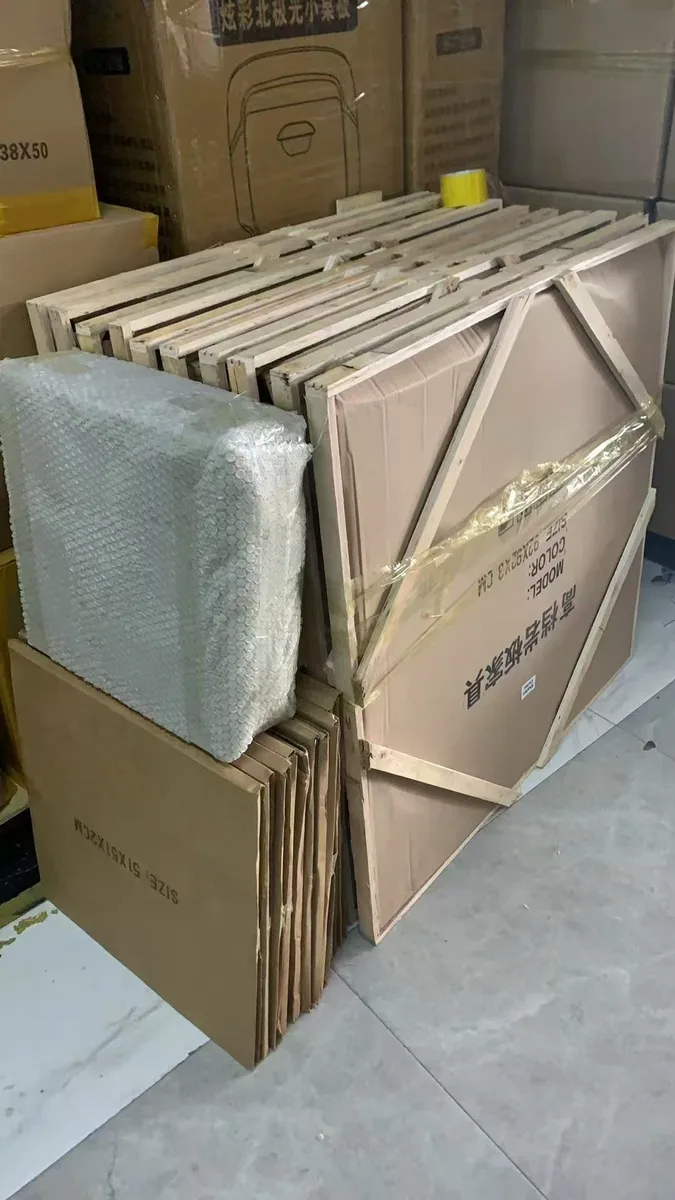
This step does three things:
- It makes every item identifiable. Products are grouped by type and labelled, so the loading plan is built from a known inventory rather than a pile of anonymous cartons.
- It builds the loading plan. Heavy, dense items go low; fragile items get corner protection and a clear position; items needed first at the destination are placed for easy access.
- It reduces confusion and mistakes. When 20+ product lines are mixed in one space, a clear sort is what prevents the wrong carton being loaded or a line being missed entirely.
Export packaging matters here as much as the product itself. Panel furniture is crated and braced; surfaces get edge protection and wrap; and any wooden packaging follows ISPM 15 heat-treatment rules so it is accepted at the destination port. The point is not just protection in transit — it is that a well-packed, well-labelled load is a load you can actually account for.
Step 4 — Consolidating Everything Into One Shipment
The final goal is to bring all the products together and arrange them into one efficient shipment, instead of leaving the client to coordinate several suppliers and several deliveries independently.
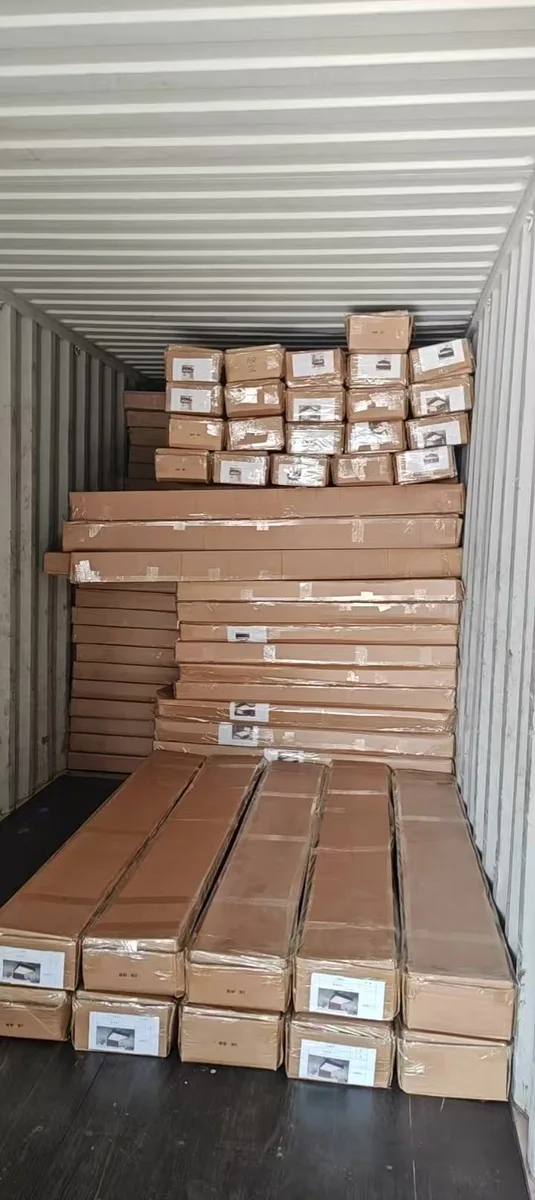
Consolidation is what turns “several factories” into “one delivery.” For this project the goods filled roughly two 40HQ containers. Consolidating them means:
- One customs entry and one delivery at the destination, rather than multiple shipments with separate tracking, timing, and failure points.
- Better container use, because items from different suppliers are loaded together against a single plan instead of each factory sending a partly filled box.
- One accountable party for the shipment, so if something is short or damaged, there is a single point to resolve it.
The commercial terms matter here. Under Incoterms, who arranges and pays for freight, insurance, and import clearance changes the whole handover — and it should be agreed in writing before production, not negotiated at the port. A consolidated shipment only stays simple if the terms, the documents, and the loading plan all line up.
What Buyers Actually Find Hardest
When we ask project owners what they find most difficult, the answers usually split three ways: finding the right suppliers, controlling costs, or coordinating the final shipment. In practice the first two are solvable with a good shortlist and a clear specification. The third — coordination — is where projects slip, because it is invisible until it goes wrong.
A restaurant that opens two weeks late does not lose “two weeks.” It loses rent, staff already hired, marketing already booked, and the momentum of a launch. That is why the unglamorous middle of the process — the checking, the sorting, the single consolidated load — is worth more than any single product choice.
The Real Job of a Sourcing Partner
Furniture sourcing is not just about finding a good product at a competitive price. It is also about managing the details customers may never see — the order list checked line by line, the warehouse sorted before loading, the container planned so nothing is missing or misrouted.
A good sourcing partner does not just help you buy furniture. They help you manage the complexity behind the purchase, so that what arrives at the port is exactly what was approved, in the quantity ordered, on the date the restaurant opens. Pieces like a black walnut accent chair or a red oak coffee table may look simple on a mood board, but each carries its own specification, lead time, and packing requirement that has to be tracked through the whole process.
If you are sourcing furniture for a restaurant, hotel, or commercial project, the question worth asking a potential partner is not “what is your best price on a chair.” It is “show me how you coordinate twenty items from different factories into one correct shipment.” The answer tells you far more.
If you are planning a restaurant or commercial fit-out and want the sourcing coordinated end to end, talk to our sourcing team by email or on WhatsApp with your item list and opening date. We will map the suppliers, the calendar, and the shipment before anything is committed.
Frequently Asked Questions
How many containers does a restaurant furniture project need?
It depends on seat count, item mix, and how much non-furniture is included, but a single mid-size restaurant often fills one to two 40HQ containers. A 40HQ holds roughly 65–68 cubic metres, so the real driver is carton volume and how tightly the load is planned, not the number of chairs alone. For the project described here, more than 20 items across several suppliers came to about two 40HQ containers.
Can one supplier handle a whole restaurant fit-out?
Usually not well. Dining chairs, tables, upholstered banquettes, and metal bases are different manufacturing specialties, so a complete package normally comes from several factories. The value of a sourcing partner is synchronising those specialists onto one production calendar so a single container can be loaded once, inspected once, and shipped once — rather than managing five factories yourself.
How do you make sure no item is missing before shipping?
Every item is checked against the order list before loading — quantities carton by carton, plus dimensions, materials, colours, and specifications against the approved sample. With 20+ SKUs, the order list is treated as the spine of the project, and packing lists are verified so the container can be accounted for on arrival. One missing carton of bases can stall an entire installation, so this step is done line by line, not by eye.
What does 'consolidated shipping' mean in furniture sourcing?
Consolidated shipping means bringing products from several suppliers together into one shipment, rather than shipping each factory's goods separately. For a restaurant project that typically means one or two containers, one customs entry, and one delivery at the destination. It cuts freight cost, removes multiple partial-shipment tracking, and gives you a single accountable party if something is short or damaged.
How long does a 20+ item restaurant furniture order take?
From deposit to shipment, allow roughly four months for a full package: time for drawings and sample approval, then production across several factories timed to converge on one loading window. The most common cause of overrun is late specification changes after production has started, so locking the order list early is the single most effective way to protect the opening date.
Do you handle installation or just delivery?
We coordinate to the port or to your nominated destination under the agreed Incoterms, and we plan the load so items are accessible in the right order on arrival. On-site installation is typically done by your local fit-out contractor, but we supply the packing lists, item mapping, and documentation that make their job straightforward. We can also advise on spare-stock levels so a few damaged pieces do not become an emergency air freight later.
What information do you need from me to start?
A item list or BOQ with quantities, the target dimensions and finishes, any drawings or reference images, and your realistic opening date. From there we map which items go to which type of factory, build the production calendar, and confirm lead times in writing before any deposit moves. The earlier you share the list, the more buffer you keep against shipping and customs.
Sources & References
Get a furniture quote
Sourcing solid wood furniture for your market? Send us your drawings, target quantities, and destination port — we will reply with pricing, MOQ, and lead time.