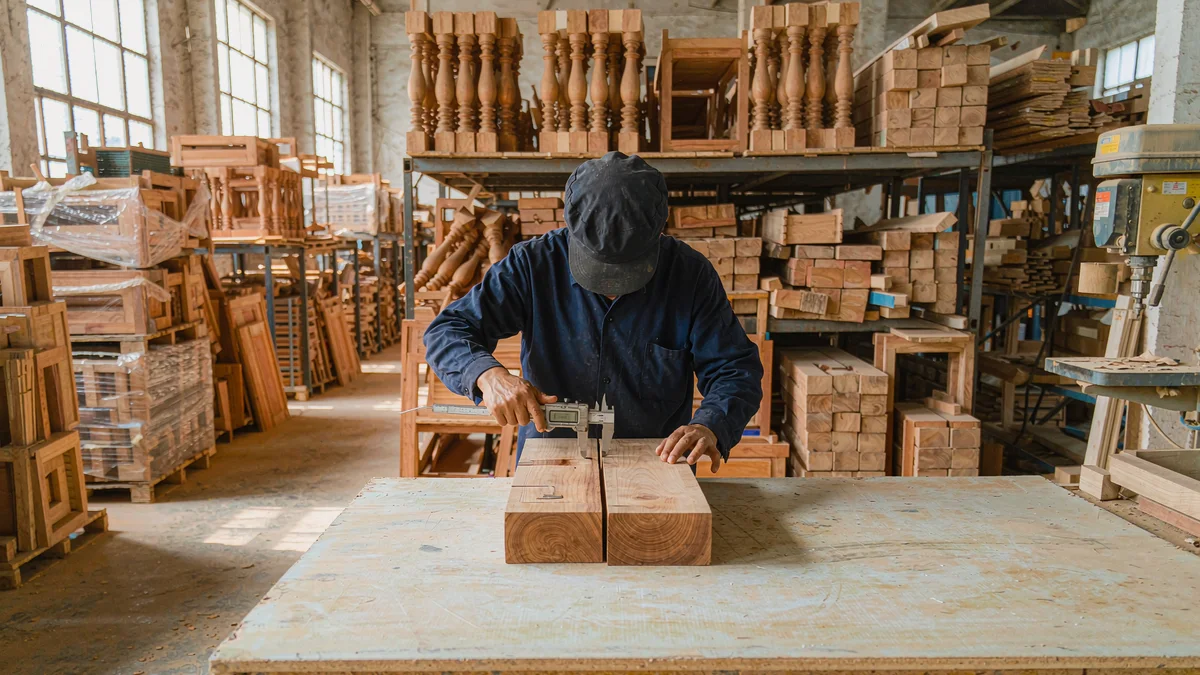
How Do You Know If a Furniture Supplier Is Reliable?
Seven checks that separate a dependable furniture manufacturer from one that only looks dependable — verified capacity, sample-to-bulk consistency, pre-shipment QC, a dated lead time, export packaging and written records.
On this page
- What Evidence Actually Proves a Furniture Supplier Is Reliable?
- How Can You Verify That the Factory Is Real and Has Room for Your Order?
- Why Does Sample-to-Bulk Consistency Matter More Than the Sample Itself?
- What Should Pre-Shipment QC Check on a Solid Wood Order?
- How Should Lead Time Be Confirmed in Writing?
- Why Is Export Packaging Part of the Product, Not an Afterthought?
- How Do Communication and Record-Keeping Reveal How a Supplier Behaves Under Pressure?
- Ready to Vet a Supplier With a Written Checklist?
Choosing a furniture supplier is the decision that determines whether a container arrives sellable or arrives as a claim. Price, a sample on a showroom table, and a polished catalogue tell you almost nothing about whether that factory can repeat the result three hundred units later. This guide sets out the checks we use when we vet a manufacturer — what to ask for, in what order, and what to put in writing before money moves.
What Evidence Actually Proves a Furniture Supplier Is Reliable?
The short answer: a reliable supplier answers with evidence for your order, not with adjectives about themselves. Seven artifacts, taken together, give you a usable picture — and you should ask for all seven before the first deposit, because none of them is expensive to produce for a factory that has the process in place.
- A production site you have seen working, not a trading office presenting as one.
- Capacity stated as numbers you can cross-check — machine counts, headcount, typical monthly output for your category.
- Approved samples held as written references, signed, dated and retained on the production floor.
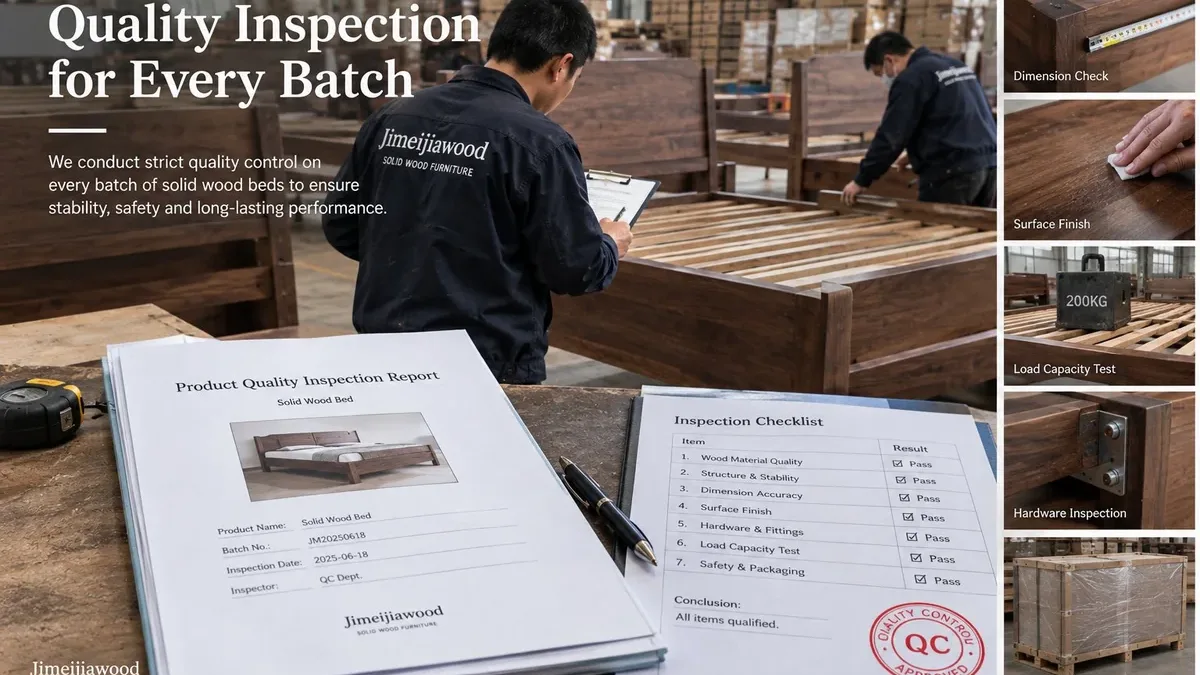
- A quality report from the batch you are buying, with photographs of that batch, not a generic capability deck.
- A lead time naming its trigger, its stages and its buffer — see the section below.
- Packaging specified in the contract, carton grade, markings and stacking method included.
- A record of any change — every material, hardware or finish substitution documented and re-approved.
If a supplier can produce these seven for the order you are about to place, you are dealing with a process-driven factory. If they can only produce a company brochure and a catalogue PDF, treat their price as a starting point rather than a commitment.
How Can You Verify That the Factory Is Real and Has Room for Your Order?
Ask for three things before the first deposit. The business licence, with its scope of business clearly showing manufacturing rather than merely trading. A live video walk-through of the workshop during working hours, with the timestamp visible. And a written list of the machines relevant to your category, with quantity and year of purchase. What you ask for next depends on which model you are buying under — see OEM vs ODM furniture for how the two differ before you start.
Then test the answers rather than reading them:
- Count against the floor. Compare the machine list with what you were shown. Numbers that do not match are the clearest single sign that you are talking to a trading company.
- Ask for the same bench in three months. Production floors change. A factory that can produce three photographs of the same work area across three months is describing a live site; a catalogue that cannot is describing a photoshoot.
- Ask what happens in week three. “If the timber order is delayed, what does day 21 look like?” The structure of that answer tells you whether there is a schedule behind the promise.
Trading companies can be excellent partners. The risk is not their existence — it is paying a factory’s cost structure while never seeing the margin documented anywhere.
Why Does Sample-to-Bulk Consistency Matter More Than the Sample Itself?
An approved sample proves that a design can be made. It says nothing about whether it can be made three hundred times. The gap between those two facts is where most buyer loss is concentrated, and it is the gap that a supplier’s confidence usually hides.
Three elements typically drift between sample and production run:
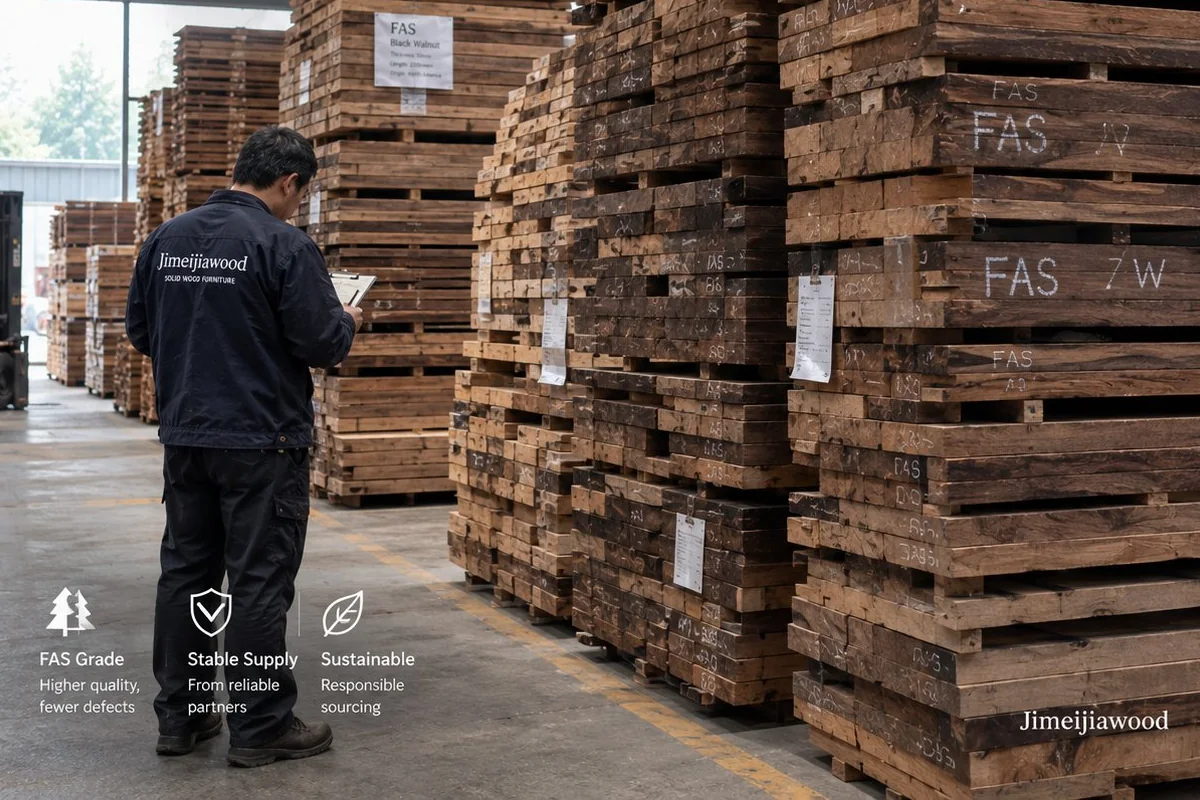
- Material. A substitute species or a lower grade inside the same category — an engineered core where solid timber was specified, or a veneer face on a part the drawing called solid. To tell engineered panels apart from solid timber on a real sample, see what furniture is actually made of.
- Colour and finish. The sample is sprayed by one operator in ideal conditions; the batch is sprayed by three operators across two days. Batch-to-batch shade movement is normal, but it becomes a claim the moment nobody wrote down what acceptable meant.
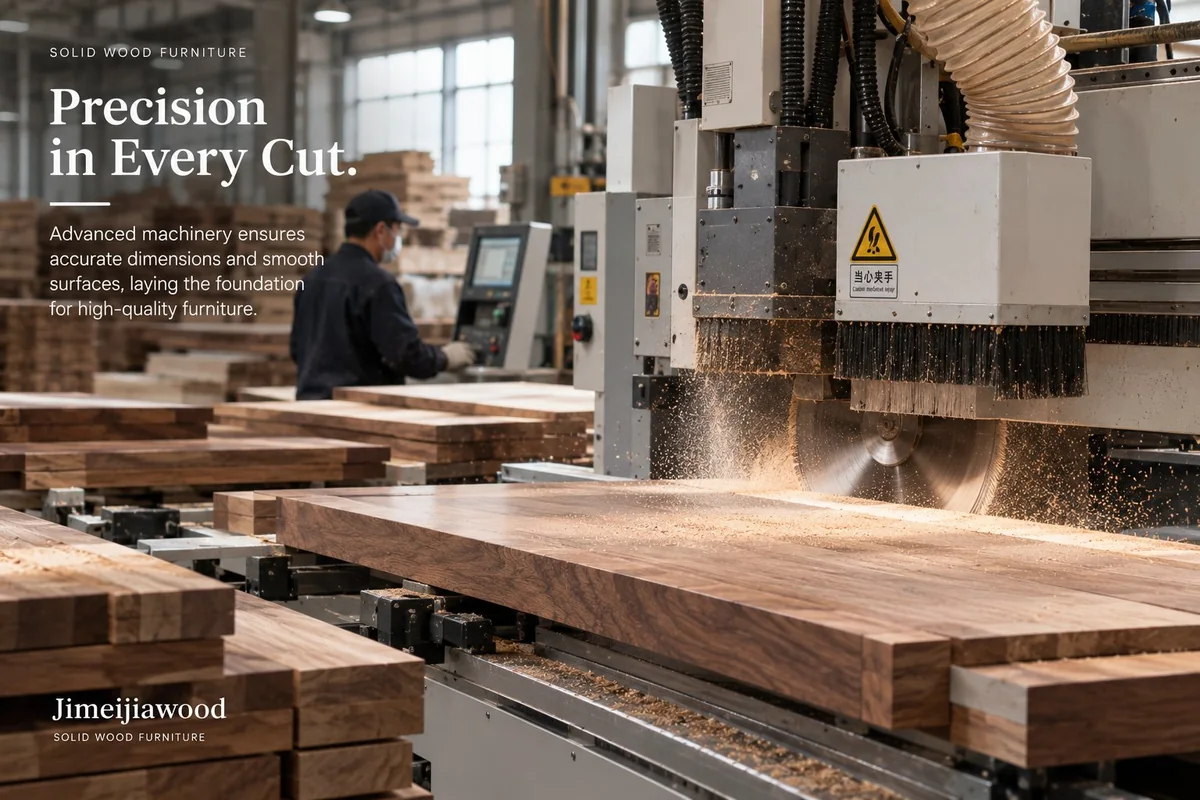
- Geometry. A hand-built sample is shaved until it fits. Duplicated tooling and jigs allow real drift, which is why dimension tolerances belong in the contract and not in a conversation.
The countermeasure is not to ask more questions. It is to convert the sample into a written reference: sign it, date it, photograph it from fixed marks, specify the finish by code, and leave it on the floor during production so the inspector compares the batch against the object rather than against memory.
What Should Pre-Shipment QC Check on a Solid Wood Order?
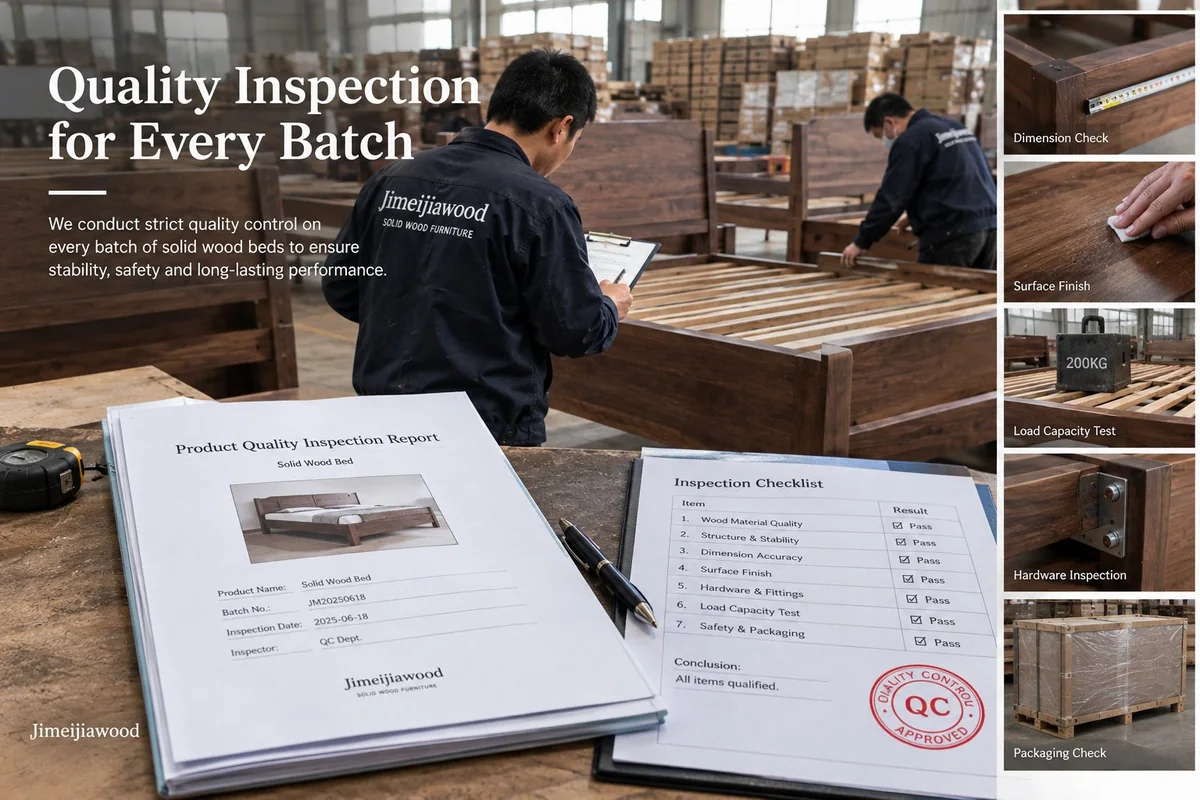
For solid wood, inspection is not a visual once-over. A usable checklist covers eight points, and each one is something a buyer can later point at:
- Quantity, tallied line by line against the packing list.
- Dimension accuracy at the joints — corner squareness and table height within a stated tolerance, commonly around 2 mm for case goods.
- Surface finish — no scratches, blotching, orange peel or missed edges, checked under raking light rather than under the shop’s ceiling lights.
- Structure — joints tight with no gaps at the glue line, no wobble once loaded.
- Hardware — correct fittings, clean threads, no missing spacers or washers.
- Colour range against the approved reference under matched lighting, with a written acceptable range instead of a verbal one.
- Packaging — corner protection, separation between finished surfaces, carton burst strength appropriate to the shipping weight.
- Marking and loading readiness — carton numbers, style codes, side marks on at least two faces, and the loading sequence.
Two habits make this considerably cheaper. First, inspect mid-production, not only before loading: the first ten to fifteen units of a run reveal whether the tooling was set up correctly, and correcting them then costs a rework instead of delaying a ship. Second, require photographs of the actual batch with a visible date. Photographs settle disputes faster than any exchange of messages.
How Should Lead Time Be Confirmed in Writing?
“Thirty days” is not a lead time. It is an intention, and it is the most expensive three words in furniture sourcing. A commitment you can act on names four things:
- The trigger. Production starts on approval of the pre-production sample, not on the date the deposit was transferred. This single line removes most of the ambiguity in a schedule.
- The stages. Timber conditioning, cut and joinery, assembly, finishing, packing — each with a window, because a total hides the part most likely to slip.
- The buffer. Stated honestly. Peak seasons before Chinese New Year and in the third quarter routinely add one to two weeks, and a good supplier tells you this before you ask.
- The consequence. A dated schedule turns a delay into a question that must be answered. Without it, a delay remains an atmosphere until the container misses its booking.
Also settle who carries the risk when a delay originates with the factory’s own material supplier. In a quiet month a well-run factory will hold its date and absorb the slip. In a peak month the same factory will move the date early and in writing. Either behaviour is information; only the absence of a written date leaves you guessing at the port.

Why Is Export Packaging Part of the Product, Not an Afterthought?
Most claims we hear from buyers do not begin as quality failures. They begin as packaging decisions taken in the last two days before loading, by people whose attention had already moved to the next order.
Five elements decide whether a solid wood order arrives sellable:
- Corner and edge protection on every panel. A shipped chair leg or table edge is the single most common damage we see, and it is almost always an omitted corner block rather than a bad carton.
- Surface separation — felt or foam between glass, mirrors and finished tops so vibration during transit cannot move one surface against another.
- A moisture barrier for sea freight, with a desiccant and sealed edges, because the underside of a finished top that was not sealed before packing will move after it is packed.
- Carton specification — the correct ply for the shipped weight, chosen for the load rather than defaulted to whatever was on the shelf.
- Marking and sequence — carton numbers, style codes and the loading order written on at least two faces, so the last carton loaded is not the first one unpacked in the warehouse.
Packaging is the only part of an order that a buyer can verify before the ship sails and cannot verify after it arrives intact. That makes it contract work, not a favour.

How Do Communication and Record-Keeping Reveal How a Supplier Behaves Under Pressure?
Reliability becomes visible when something goes wrong. Before that point, two habits will tell you most of what you need to know.
The first is written confirmation. A supplier who confirms specification changes, inspections and schedule moves in writing is showing you how they will handle a future complaint. A supplier for whom everything is “no problem” in a chat thread is the same person who will later explain that the problem came from your specification.
The second is behaviour on a miss. Ask what happens when a deadline passes. Factories that escalate early are the ones worth the relationship: a delayed timber delivery announced on day eight is a manageable adjustment, while the identical delay announced on day twenty-six is a sea freight booking and a warehouse in the destination country.
One question gives away more than any audit — “Tell me about the last order where you could not meet the date. What happened, and what did you do about it?” The quality of that answer is the most useful supplier assessment available, and it costs about five minutes.
Ready to Vet a Supplier With a Written Checklist?
Put the seven items above into the order confirmation before the deposit clears: production site and capacity, approved sample reference, mid-production and pre-shipment inspection with photographs, a staged lead time with its trigger, the packaging specification, and a change-control line for any substitution. None of it is unusual, and a factory that runs these steps will not be uncomfortable writing them down.
And once two or three factories have cleared these checks, the decision becomes choosing between them — How Do You Compare Furniture Suppliers Before You Commit? sets out the weighted scoring card, the disqualifying red flags and the pilot-order sequence for exactly that step.
If you would like us to walk through the checklist against your current shortlist, or to run an inspection on your first container from a new supplier, the sourcing team can review your specification line by line.
Frequently Asked Questions
How long does it take to verify a furniture supplier?
Plan for one to two weeks before the first production order, and that is without travel. The critical-path item is usually the pre-production sample, because you cannot confirm consistency against a reference that does not exist yet. Within that window the checks themselves are fast: documents arrive in a day, a factory walk-through takes an afternoon, and an inspection report on a completed order takes two to three days to produce. Buyers who skip deliberately and place a trial container instead are not saving time — they are buying the same information one sea freight cycle later, with the freight cost already spent.
What is the minimum I can do if I cannot travel to the factory?
Three things, in this order. First, ask for a live video walk-through conducted during working hours rather than a pre-recorded file — ask the person showing you to pan across the whole floor, including the paint shop and the packing area, and to show the timber store. Second, require that any claim about capacity be given as machine counts and headcount, which you can sanity-check against the site's listed employees or the factory gate in a satellite view. Third, buy one independent inspection for the first container. The combination of a live walk-through and a third-party report substitutes for most of what a visit would have told you, without the flights.
Does holding an ISO 9001 certificate mean the quality will be right?
No. ISO 9001 describes a management system, not a finished product. A certified factory can still ship a bad batch, and an uncertified one can have stricter in-house checks. What the certificate does is change where the risk sits: with a certified supplier, the process for handling defects, corrective action and record-keeping exists on paper and has been audited by an external body, so a problem has somewhere to be recorded and traced. Read the certificate for that reason and ask for the audit report and its scope statement. A scope line that names only trading or assembly, rather than the manufacturing you are buying, is worth noting before it matters.
Should I pay for a third-party inspection?
For a first order from a new supplier, yes — it is the cheapest insurance in the sourcing budget. A third-party inspector works from your specification, not the factory's, and reports to you with photographs and measurements, which means an argument about the batch is settled by evidence rather than by tone. The cost of a pre-shipment inspection on a full container is small next to one container of freight or a claim. What matters is that the inspector is engaged against a written checklist that you supply and approved against a physical reference, otherwise they will inspect what the factory has already decided to show them.
What if the supplier refuses to send production photos or videos?
Treat it as an answer to the question you were really asking. Factories that run periodic checks have no reason to hide a photograph — the picture confirms their own claim. Refusal usually has one of two causes: the batch is not as good as the sample, or there is no process producing records to photograph, which is the same thing wearing another hat. The practical step is not to argue but to change the contract: make a mid-production photo milestone a condition of the remaining payment, and name the person responsible on the order confirmation. If a supplier will not agree to that, you now know what a first container would have taught you, three weeks earlier than expected.
Is a trading company or a factory a better partner?
Neither is inherently better; they solve different problems. A factory gives you direct control over specification, tooling and inspection, and usually a better price at volume, but it typically asks for larger minimums and pays less attention to a single small order. A trading company or sourcing agent can consolidate several factories into one container, handle smaller quantities, and absorb the communication load — but you are paying a margin on top, and the factory floor is one layer further from you. The test is which interface you need to see: if your volumes justify a factory relationship, go direct; if you are mixing categories and containers, an intermediary with its own inspection habit is usually the more reliable option. For a concrete look at how that multi-factory coordination actually runs on a real project, see our [restaurant furniture sourcing case study](/blog/restaurant-furniture-sourcing-case-study/).
Sources & References
Get a furniture quote
Sourcing solid wood furniture for your market? Send us your drawings, target quantities, and destination port — we will reply with pricing, MOQ, and lead time.