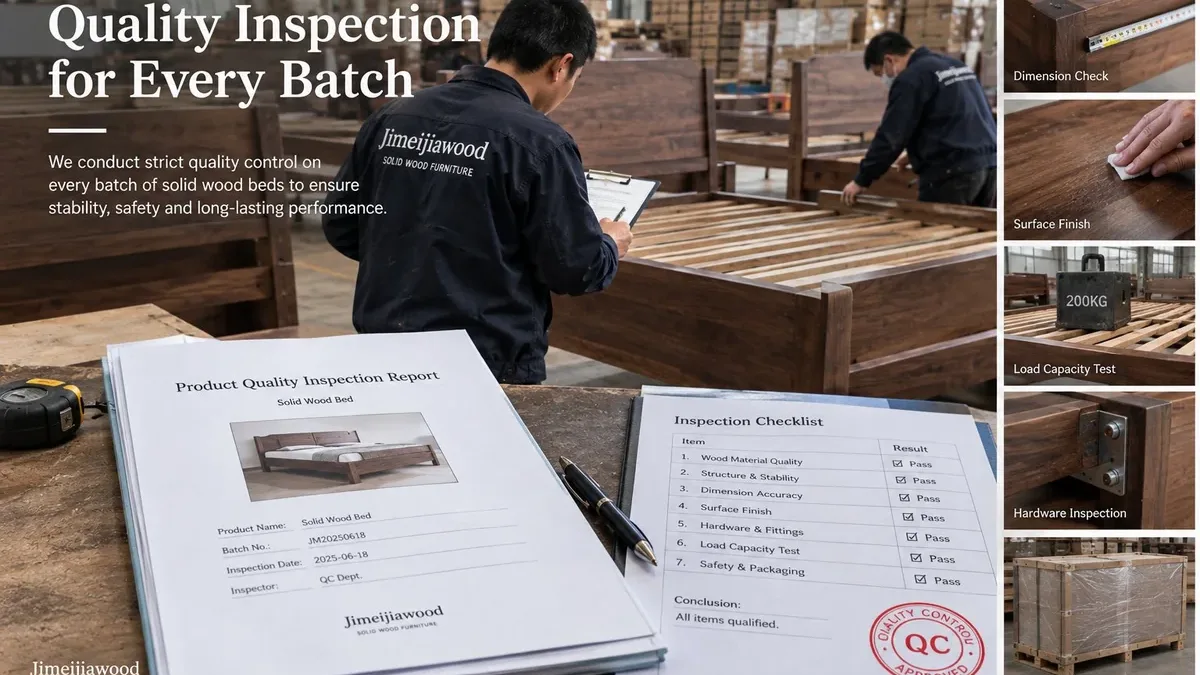
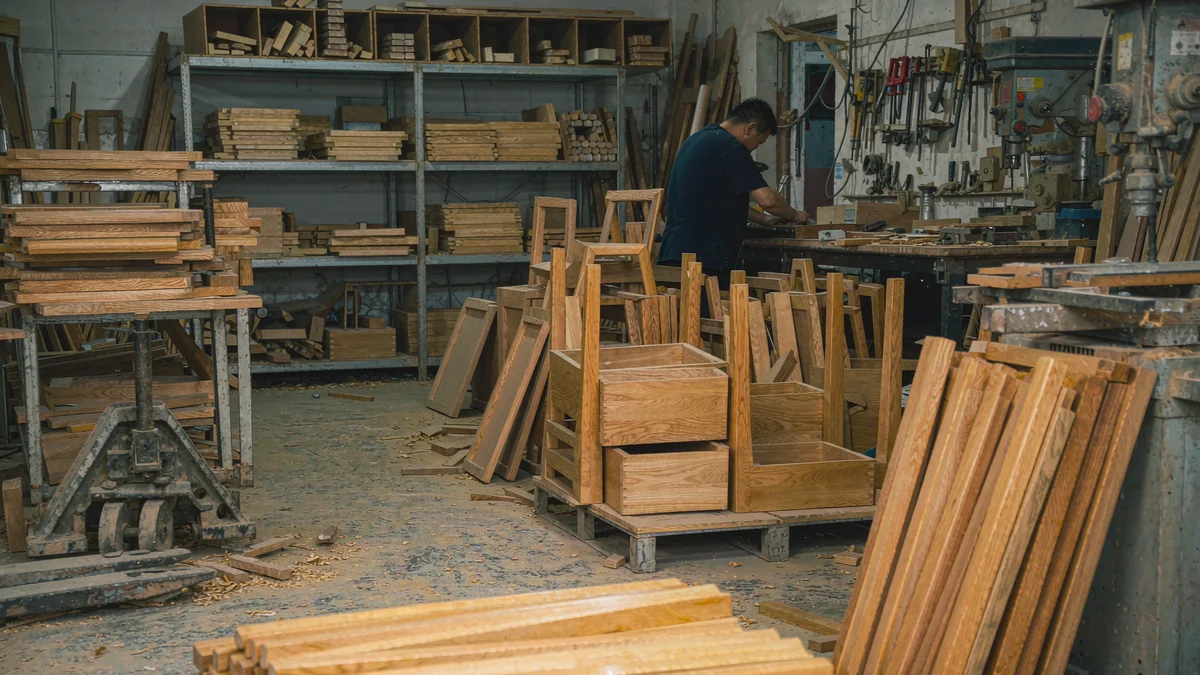
How Do You Compare Furniture Suppliers Before You Commit?
Compare furniture suppliers on one weighted scoring card — seven dimensions, the same document set from every factory, the red flags that disqualify, and a pilot order that turns the card into evidence.
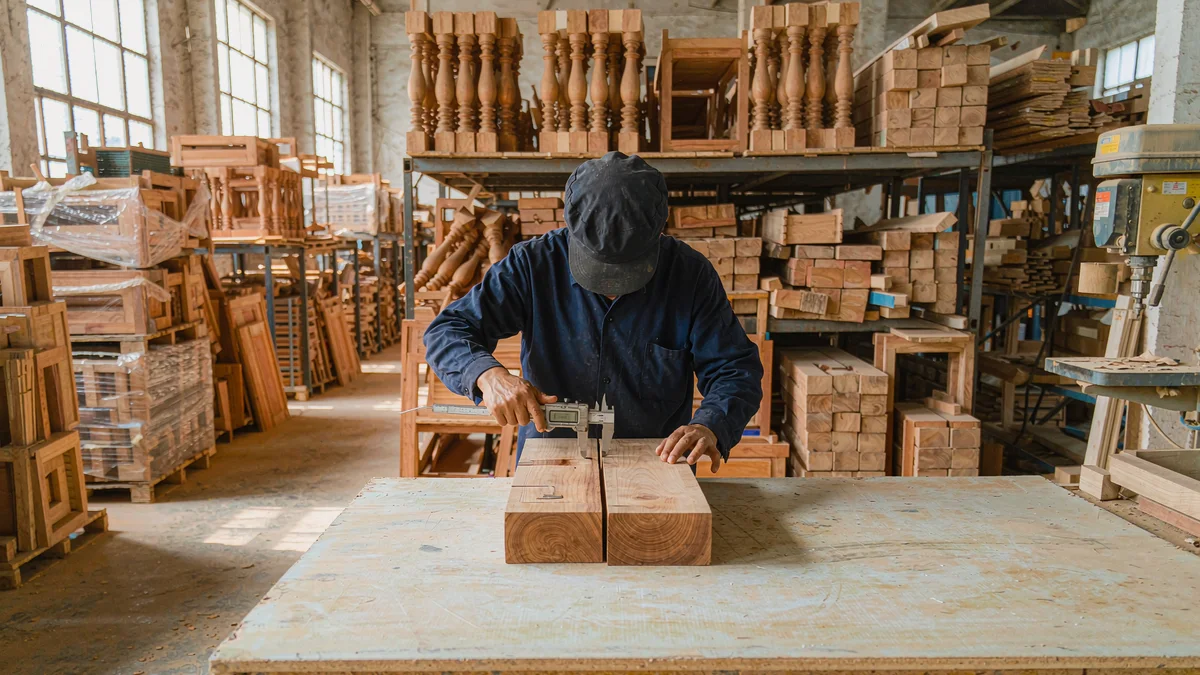
On this page
- What Does Comparing Furniture Suppliers Actually Mean?
- Which Dimensions Should You Score a Supplier On?
- How Do You Build a Side-by-Side Scoring Card?
- What Documents Should You Request From Every Supplier?
- Which Red Flags Disqualify a Furniture Supplier?
- Factory or Trading Company — How Should You Compare the Two?
- What Pilot Order Confirms the Comparison?
- How Should Price Weigh in the Final Decision?
- Ready to Put Your Shortlist on One Card?
Comparing furniture suppliers is not choosing between two quotations. It is running every factory on your shortlist through the same questions, the same documents and the same decision criteria, and scoring each one on evidence produced for your order — not on how quickly it replies. This guide sets out the scoring card, the document list, the disqualifying red flags and the pilot-order sequence we use when a buyer is choosing between two or three factories for the same programme.
What Does Comparing Furniture Suppliers Actually Mean?
A real comparison holds every supplier against the same card, the same documents and the same order. Most buyers compare quotations instead, which measures a supplier’s eagerness to win the order rather than its ability to repeat the result three hundred units later.
The distinction matters because quotations, catalogue photographs and fast replies are all outputs — they are easy for a salesperson to produce and impossible to verify from the buyer’s side. The things that predict how your container arrives are systems: how the factory controls the material entering the floor, how it holds a sample’s geometry across a bulk run, and how it writes commitments down. Those systems can be inspected, and once you inspect them supplier by supplier, the comparison stops being a matter of taste.
So the working question is not “which supplier is better” but “which supplier is better for this order”. A workshop that excels at repeated runs of case goods may be the wrong home for a one-off hotel project, and a flexible small shop may be the wrong home for a replenishment programme. The card below exists to make that difference visible before money moves.
Which Dimensions Should You Score a Supplier On?
Score seven dimensions and fix the weights before you look at any supplier: product and material fit, capacity and process ownership, sample-to-bulk consistency, quality evidence, lead-time discipline, export packaging, and documentation. Weighting first prevents the most common scoring failure — letting a persuasive quotation set the frame.
| Dimension | Suggested weight | What good looks like | What weak looks like |
|---|---|---|---|
| Product & material fit | 20% | Produces your species, grades and constructions in current runs | ”We can make anything”, with no matching floor |
| Capacity & process ownership | 15% | Machine counts stated; cutting and finishing owned in-house; any outsourcing named | No machine list; every process “handled” |
| Sample-to-bulk consistency | 15% | Signed samples dated and held on the floor; batch compared against them | A hand-built one-off sample and no written reference |
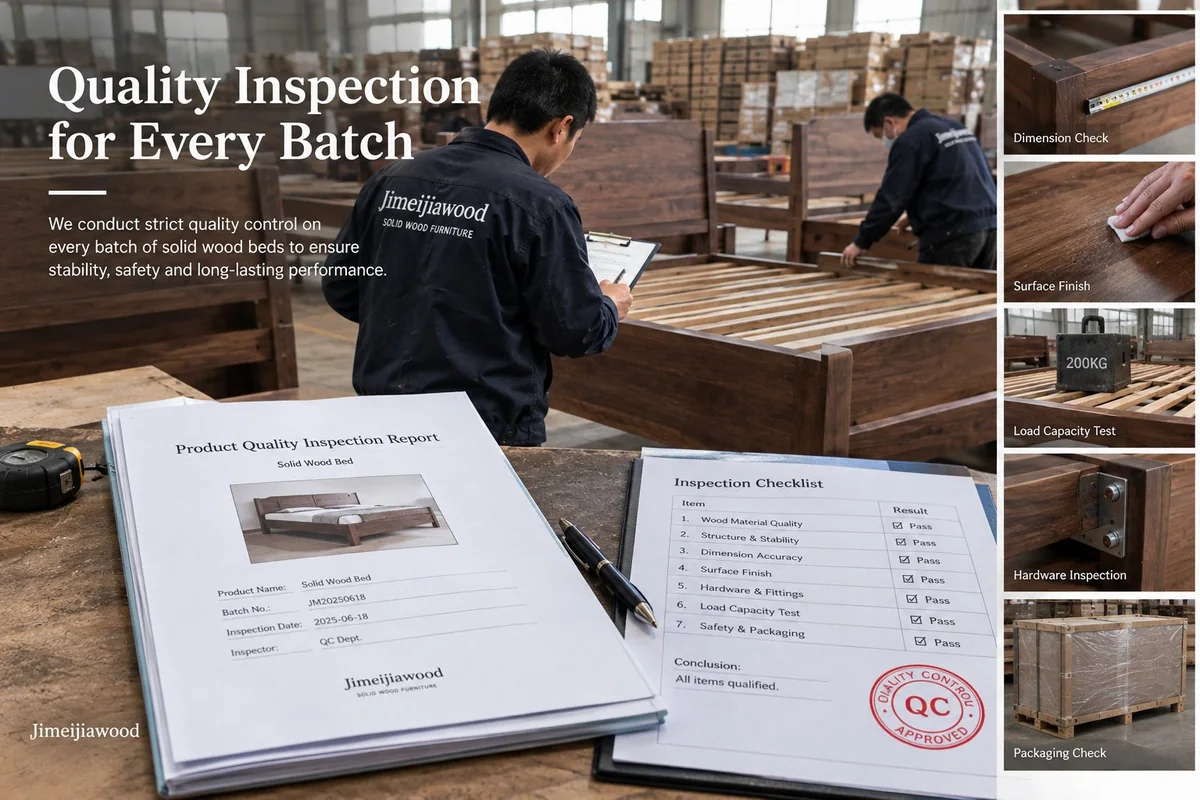
| Quality evidence | 15% | QC report with dated photographs from the actual batch | A generic capability deck with no batch data |
| Lead-time discipline | 10% | A staged schedule naming its trigger and buffer | One number, confirmed verbally |
| Export packaging | 10% | Packaging specified per order: corner protection, separation, moisture barrier | ”Standard export packing” |
| Documentation & communication | 15% | Written confirmations; licence, bank and quotation names all match | Verbal everything; inconsistent letterheads |
The weights are a starting point, not a law. On a fully custom programme, product fit and consistency deserve more; on a replenishment order of a proven design, lead-time discipline and packaging rise. Whatever you choose, fix the weights before the documents arrive — a card re-weighted mid-comparison quietly becomes a card built around a favourite.
Judged on real production rather than promises, the fit row separates factories quickly. A floor that routinely produces case goods at tight tolerances — a two-drawer red oak coffee table is a representative piece — starts from a different base than a workshop assembled around flat panels, whatever the catalogue shows. The same is true at the larger end of the range: a floor that ships platform beds in black walnut by the container has already solved the long-panel problems that a first-time bedroom programme runs into.
How Do You Build a Side-by-Side Scoring Card?
Build one sheet with the dimensions down the side, the suppliers across the top, and a document or a number in every cell — never an impression. The sheet is the whole method: it forces every supplier through identical questions, and it leaves you a written record of why the order went where it went.
| Dimension | Weight | Supplier A | Supplier B | Evidence required |
|---|---|---|---|---|
| Product & material fit | 20% | — | — | Current production list in your species; sample photos |
| Capacity & process ownership | 15% | — | — | Machine list with counts; licence scope |
| Sample-to-bulk consistency | 15% | — | — | Signed sample reference; batch photos |
| Quality evidence | 15% | — | — | QC report from a real batch, with date |
| Lead-time discipline | 10% | — | — | Written schedule naming trigger and stages |
| Export packaging | 10% | — | — | Packaging spec per order |
| Documentation & communication | 15% | — | — | Consistent letterheads; written confirmations |
| Weighted score | 100% | — | — | Fill only from documents |
Three rules keep the card honest. First, score only after the documents arrive — a blank cell means “pending”, not a five out of five given for the tone of the emails. Second, record who said what and on which date in the evidence column; the card doubles as a dispute log later. Third, limit the shortlist to two or three factories — beyond that the document chase collapses under its own weight and buyers default back to comparing prices.
What Documents Should You Request From Every Supplier?
Request the same document set from every shortlisted supplier, in the same week, so the comparison compares like with like. The set has eight items:
- The business licence, with a scope of business showing manufacturing, not merely trading.
- A machine list relevant to your category, with quantity and year of purchase.
- A live video walk-through of the workshop during working hours, timestamp visible.
- A QC report from a real completed batch, with photographs of that batch and a visible date.
- The sample reference system — how samples are signed, dated and retained on the floor.
- A written lead time naming its trigger, its stages and its seasonal buffer.
- A packaging specification for your order, not a generic standard.
- Certificates with their scope lines — ISO 9001 for the management system, FSC chain of custody if you are buying certified timber.
We cover how to verify each document in detail in How Do You Know If a Furniture Supplier Is Reliable? — that guide handles proving one factory; this one handles choosing between several. One caution belongs here as well: a certificate is a claim about a system, not about your goods. ISO 9001 describes how defects are recorded and traced, not what ships in the carton, so read the scope line and treat the certificate as one cell on the card, never as the score itself.
Which Red Flags Disqualify a Furniture Supplier?
Some findings are not points off the score — they end the evaluation, because they describe how a supplier will behave after your deposit clears, not just how it sources.
| Red flag | What it usually means | What to do |
|---|---|---|
| Vague or shifting material declaration | A substitution is already planned | Require species and grade in writing — see what furniture is actually made of |
| Quotation far below the field, no explanation | A missing process or a hidden substitution | Ask for it itemized; compare on landed cost |
| Everything is “no problem”, nothing in writing | No process for records — and none coming | Send your specification and see whether it returns in writing |
| Refusal of third-party inspection | The batch is not expected to match the sample | Make an inspection a condition of the remaining payment |
| Samples that do not match the catalogue | The catalogue is borrowed or staged | Ask for batch photographs of the same item, dated |
| Pressure toward a large first order | The pilot order is exactly the test being avoided | Insist on 100–300 units first |
| Inconsistent documents — licence, bank account and quotation headers differ | You do not yet know who you are paying | Stop; resolve the contracting party before anything else |
One red flag is a pause and a question; two on the same shortlist entry is a walk-away, however attractive the price. The asymmetry is deliberate: a factory that runs an honest process loses nothing by letting a third-party inspector onto the floor or by writing a material declaration down, so the flags reveal structure rather than mood. Buyers we know who have absorbed a full claim almost always identify one of these rows in hindsight — the cheapest quotation was rarely the lowest total cost.
Factory or Trading Company — How Should You Compare the Two?
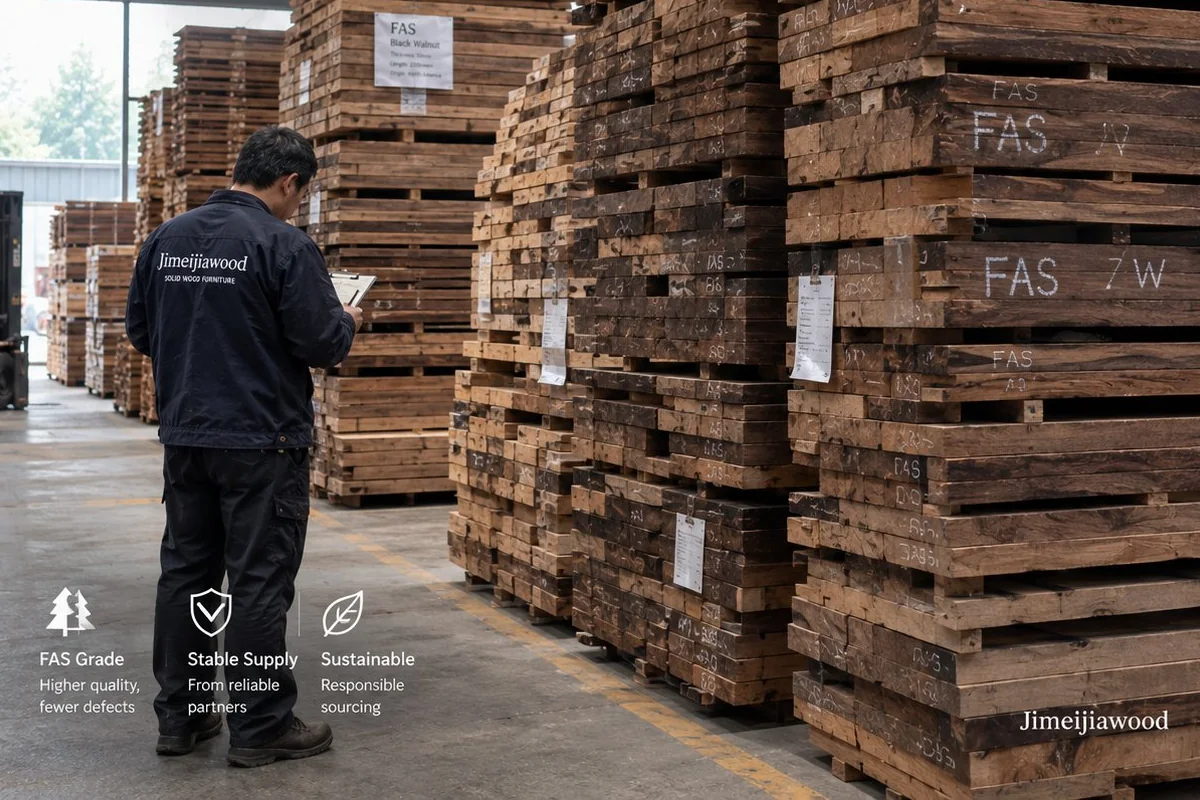
Compare both on the same card, but expect them to win on different rows. A factory wins capacity, process ownership, consistency control and unit price at volume; a trading company wins mixed containers, smaller quantities and communication bandwidth, at a margin and one layer of distance from the floor.
The honest test is a single question: who owns the machines, and who can put your inspector on the floor next week? A trading company that answers it plainly, names its factories and offers its own inspection habit is a legitimate option — the risk is never the intermediary’s existence, it is paying a factory’s cost structure while never seeing the margin or the floor documented anywhere.
On the card, weight the rows to the relationship you actually need. If you are building a private-label programme around your own designs, process ownership and consistency dominate — see OEM vs ODM furniture for how those two models shift the comparison. If you are consolidating categories across several regions, cluster proximity matters more than a single factory’s floor — our overview of where furniture is made in China maps which regions specialise in which constructions.
What Pilot Order Confirms the Comparison?
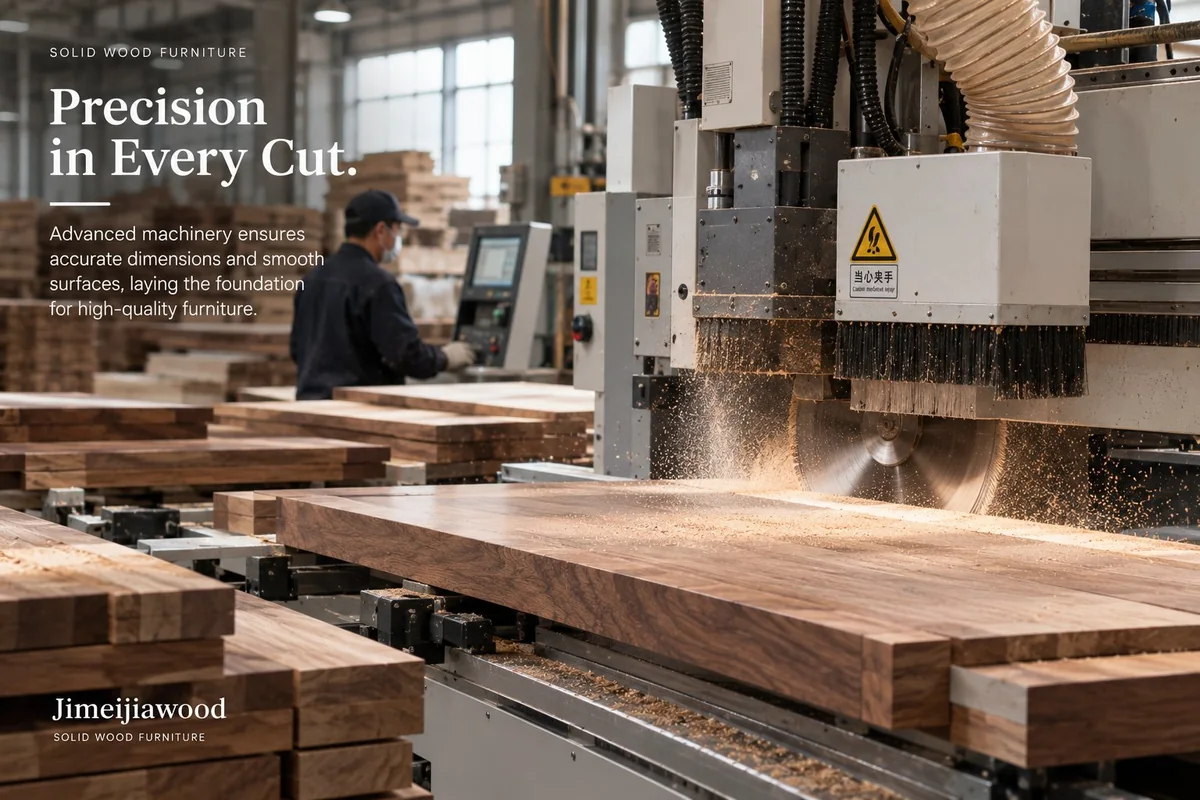
A pilot order of roughly 100 to 300 units, run through the full production discipline of a real order, is the cheapest way to turn a scoring card into evidence. It is small in money and full in process — every stage present, no shortcuts, because a pilot that skips stages buys less information than its size suggests.
| Stage | What to require | What it tells you |
|---|---|---|
| Pre-production sample | Signed, dated, retained on the floor | Whether the specification can be hit at all |
| Deposit & schedule | Written trigger (sample approval) and staged dates | Schedule honesty under a real commitment |
| Mid-production | Dated photographs of the first 10–15 units | Whether tooling holds the sample’s geometry |
| Pre-shipment | Independent inspection against your checklist | Whether the batch matches the approved reference |
| Loading & documents | Packing spec followed; documents match the PO | Export competence end to end |
For a solid wood programme — say a run of 200 units of a solid ash dining table — the pilot exposes in one cycle what a year of messaging would not: whether the finish range arrives where the sample was, whether the corners ship protected, and whether the documents arrive as written. The reference system matters more than most buyers expect at this stage, which is why we treat the approved sample versus bulk production as its own discipline rather than a formality.

How Should Price Weigh in the Final Decision?
Price enters last, and it is judged as landed cost per sellable unit — a quotation is one input to the card, not a substitute for the card.
Put the quotations on the same basis first: the same Incoterms term, the same specification, the same packaging requirement. Then extend each one with freight, duty and inspection, and subtract the realistic cost of one claim from the cheaper side. Under that arithmetic, differences of a few percent on FOB routinely reverse, because the cheaper factory’s savings were coming out of rows the card had already scored — packaging, material grade, or a schedule loose enough to miss a booking.
A useful discipline is to price the difference between suppliers rather than the suppliers themselves. If the higher-scoring factory quotes two percent more, ask what one claim, one re-work or one delayed booking costs on your volume; on almost any container programme the answer is larger than the gap. Buyers who anchor the whole comparison on the quotation usually discover that they paid for the card’s lower rows anyway — at claim stage, in a currency less convenient than dollars.
Ready to Put Your Shortlist on One Card?
Put your two or three shortlisted factories on the same sheet before the next quotation round: fix the weights, request the eight documents in the same week, score from evidence only, walk away from the red flags, and confirm the winner with a 100–300 unit pilot run through the full production discipline.
If you would like a second pair of eyes on the comparison — or a quotation on the same specification from our own floor to add to the card — send us your product list and target market. The sourcing team will come back with the documents listed above, filled in for our factory: licence, machine list, sample reference, a written lead time and our packaging specification, so your card has a completed column before you commit.
Frequently Asked Questions
What is the best way to compare two furniture suppliers?
Put both factories on the same scoring card and fill it with documents, not impressions. Request the identical document set from each in the same week — business licence, machine list, a quality report from a real batch, a written lead time, and a packaging specification — then score each dimension against that evidence. The most common mistake is comparing quotations, which measures a supplier's eagerness to win the order rather than its ability to repeat the result three hundred units later.
Which metric matters most when comparing furniture factories?
Consistency evidence outranks every other single number. A factory that can show a signed sample held on the floor, photographs of the actual batch, and an inspection report from a completed order is demonstrating that its process holds a specification across a run. On-time delivery above roughly 95 percent and a healthy reorder rate are useful second opinions, but both describe the past; consistency evidence describes the process that will produce your container.
Factory or trading company — which should I choose?
Compare both on the same card, but expect them to win on different rows. A factory scores higher on capacity, process ownership, consistency control and unit price at volume, but usually asks for larger minimums. A trading company scores higher on consolidating several factories into one container, handling smaller quantities and carrying the communication load, at a margin and one layer of distance from the floor. The deciding test is which interface you need to see: if your volumes justify a factory relationship, go direct; if you are mixing categories, an intermediary with its own inspection habit is often the more reliable option.
How do I compare suppliers when their prices are very different?
First confirm the quotations are on the same Incoterms basis and the same specification — a lower price on thinner material, lighter packaging or a vague grade is not a comparable number. Then judge each quotation as landed cost per sellable unit: add freight, duty and inspection, and subtract the realistic cost of one claim. Differences under about five percent are routinely erased by packaging decisions, material substitution or a schedule that misses a booking, so price should enter the scorecard last, not first.
How big should a pilot order be before committing to a supplier?
Roughly 100 to 300 units across a small part of your range is enough, provided it runs through the full production discipline of a real order — pre-production sample, deposit against a written schedule, mid-production photographs, a pre-shipment inspection and proper export packing. A pilot that skips stages buys less information than its size suggests. The purpose is to observe the process, not to save money on the sample run.
Can I compare suppliers properly without visiting the factories?
Yes, with three substitutes for the visit: a live video walk-through during working hours rather than a pre-recorded file, capacity stated as machine counts and headcount that you can cross-check, and one independent inspection on the first order. Together these cover most of what a trip would have told you. What you cannot get remotely is the atmosphere of the floor — which is exactly why the document set and the pilot order matter more when travel is not on the table.
How long should a proper supplier comparison take?
Plan for one to two weeks of document collection and scoring, plus the production time of the pilot order — which is typically four to six weeks for solid wood. The document stage is fast when a supplier has a process: most papers arrive within a day or two. The critical-path item is the pre-production sample, because consistency cannot be scored against a reference that does not exist. Buyers who skip the comparison to save time usually buy the same information one sea freight cycle later, with the freight cost already spent.
Sources & References
Get a furniture quote
Sourcing solid wood furniture for your market? Send us your drawings, target quantities, and destination port — we will reply with pricing, MOQ, and lead time.