Where Is Furniture Actually Made in China — And Which Region Makes What?
China's furniture industry is a map of specialised regional clusters, not one single 'furniture city'. Foshan leads trade and upholstery, Nankang leads volume — and for export-grade solid wood, the centre of gravity is Qingdao.
On this page
- Why Do Chinese Furniture Factories Cluster Into Regions?
- What Is Each Chinese Furniture Region Actually Good At?
- Where Does Export-Grade Solid Wood Furniture Come From — and Why Qingdao?
- How Do Materials Differ Across a Solid Wood Range?
- How Do Styles Differ — and Which Market Does Each Fit?
- What Should You Ask a Supplier Before Choosing a Region and Material?
Buyers searching for a furniture supplier in China almost always meet the same two words first: Foshan and Guangdong. They are the right words for a lot of products — but not for all of them. China’s furniture industry is a map of specialised regional clusters, and each cluster has its own material strengths, price bands and product categories. For export-grade solid wood furniture, the centre of gravity is not in the south at all: it is in the north, in Qingdao, Shandong — a city the China National Furniture Association has designated as a national furniture export industry base, and where our own 15,000 m² factory has been producing since 2008.
Why Do Chinese Furniture Factories Cluster Into Regions?
Because furniture manufacturing depends on shared supplier networks, pools of skilled labour and freight infrastructure that only make economic sense when factories group together. An upholstered sofa factory needs foam, fabric, webbing, frames and hardware within an hour’s drive; a solid wood factory needs kilns, lumber yards, finishing specialists and machinists. Where those inputs concentrate, factories follow — and the cluster gets better and cheaper at that one category than anywhere else.
Clusters also build their own commercial infrastructure: wholesale markets, material malls, trade fairs and logistics agents that specialise in the category. That is why a buyer sourcing upholstered bedframes and a buyer sourcing oak dining tables will usually be pointed to two different cities by the same trading company.
The practical conclusion for a buyer is simple: “made in China” is not one supply chain. It is several, each with its own economics. Choosing the wrong region does not make good furniture impossible, but it usually means paying for the cluster’s weaknesses instead of its strengths.
What Is Each Chinese Furniture Region Actually Good At?
Roughly: Foshan for trade and upholstery, Dongguan for high-end export, Nankang for volume, Anji for chairs, and Qingdao for export-grade solid wood.
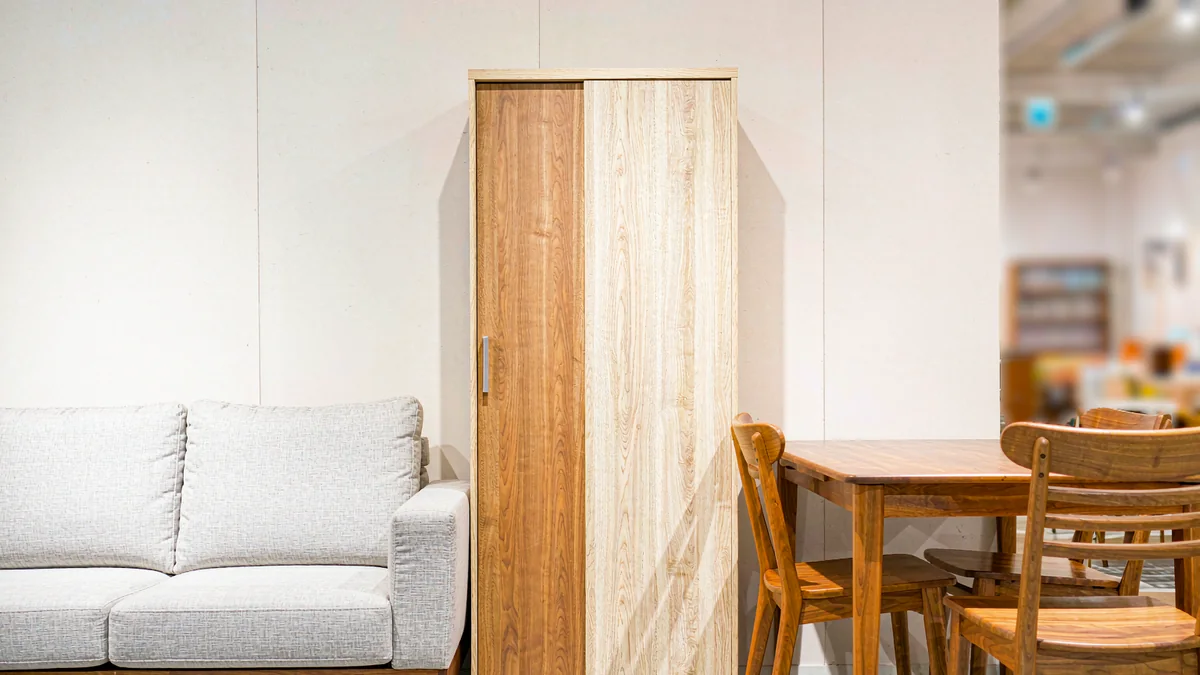
- Foshan (Shunde), Guangdong — the commercial capital. Lecong hosts one of the world’s largest furniture trading markets and Longjiang is a national furniture materials hub. Full-category coverage with exceptional supplier density; strongest for upholstered furniture, panel furniture and complete-home packages.
- Dongguan, Guangdong — the high-end export cluster. Dalingshan has long been one of China’s largest furniture export towns, and Houjie hosts the major trade exhibitions. Strong in premium export programs.
- Nankang (Ganzhou), Jiangxi — one of the largest furniture manufacturing bases in the country by output value, built around imported rubberwood. Value-engineered solid and panel furniture at aggressive price points.
- Anji, Zhejiang — nationally recognised as China’s chair capital and a major export base for sofas.
- Chengdu and Chongzhou, Sichuan — the panel-furniture heart of the southwest, serving the domestic value market at scale.
- Ningjin, Shandong — officially titled a “hometown of solid wood furniture”, and the country’s dominant source of unfinished solid-wood components that feed factories elsewhere.
- Xianghe and Shengfang, Hebei — the north’s trading hub, and a national base for metal-and-glass furniture.
- Qingdao, Shandong — the solid wood processing and export base of northern China, and the subject of the next section.
Where Does Export-Grade Solid Wood Furniture Come From — and Why Qingdao?
For export-grade solid wood, the strongest base in northern China is Qingdao — and that is not an accident of history, but the result of port logistics and climate working in the industry’s favour.
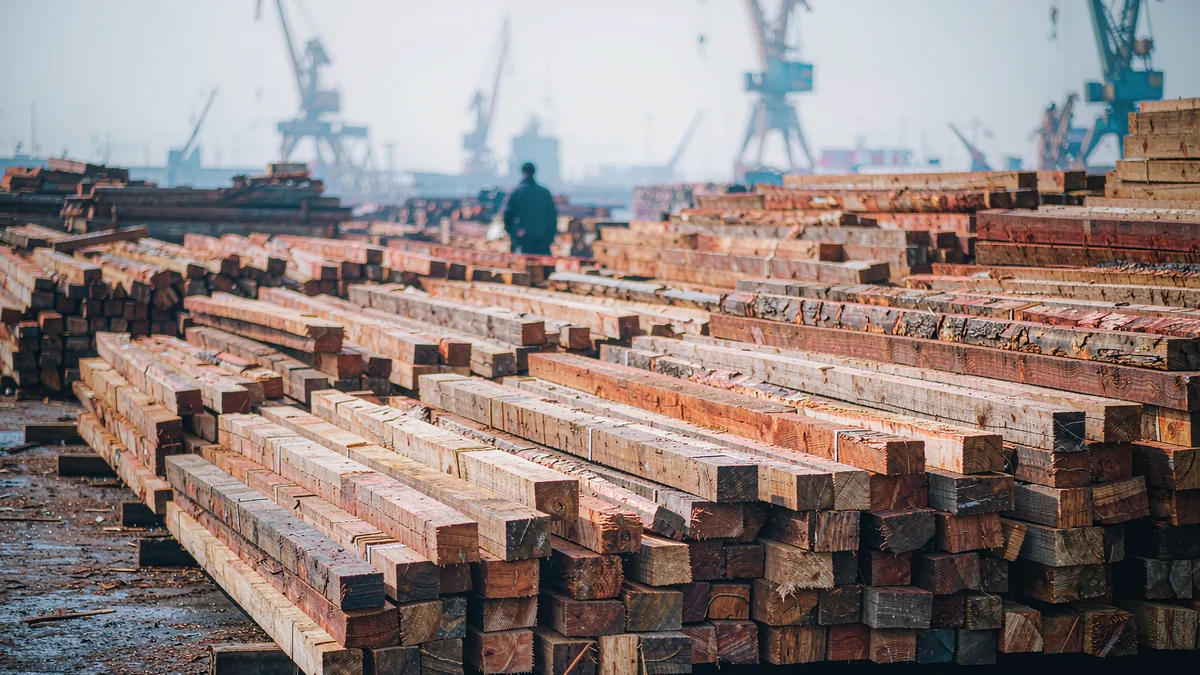
The China National Furniture Association has designated Jiaoxi Town in Jiaozhou, Qingdao, as a “China Northern Furniture Export Industry Base”, and the city’s own industry association describes solid wood processing and export as Qingdao’s core speciality. Production concentrates in three districts — Jiaozhou, Chengyang and Jimo — and Jiaozhou alone counted more than 1,200 registered home-furnishing companies in 2022, over 600 of them manufacturers.
Two structural advantages explain why solid wood congregates here:
- Port-side raw material. Qingdao is one of the country’s major entry gateways for imported hardwood logs, with professional timber distribution yards adjacent to the factory districts. Lumber arrives where it is needed without long inland hauls, which keeps supply stable and cost predictable — a meaningful advantage when your entire product is made from the material. The destination side of the journey matters just as much — duty, GST and biosecurity are set by where the goods land, not where they are made. See how to calculate furniture landed cost for the full formula.
- A climate that suits wood. Qingdao sits at roughly 36°N, where the temperature and humidity range meets long-term timber storage standards and helps reduce cracking and deformation before a board ever reaches the saw. For a category whose two most common field complaints are warping tops and open joints, starting with stable material is not a detail — it is the foundation.
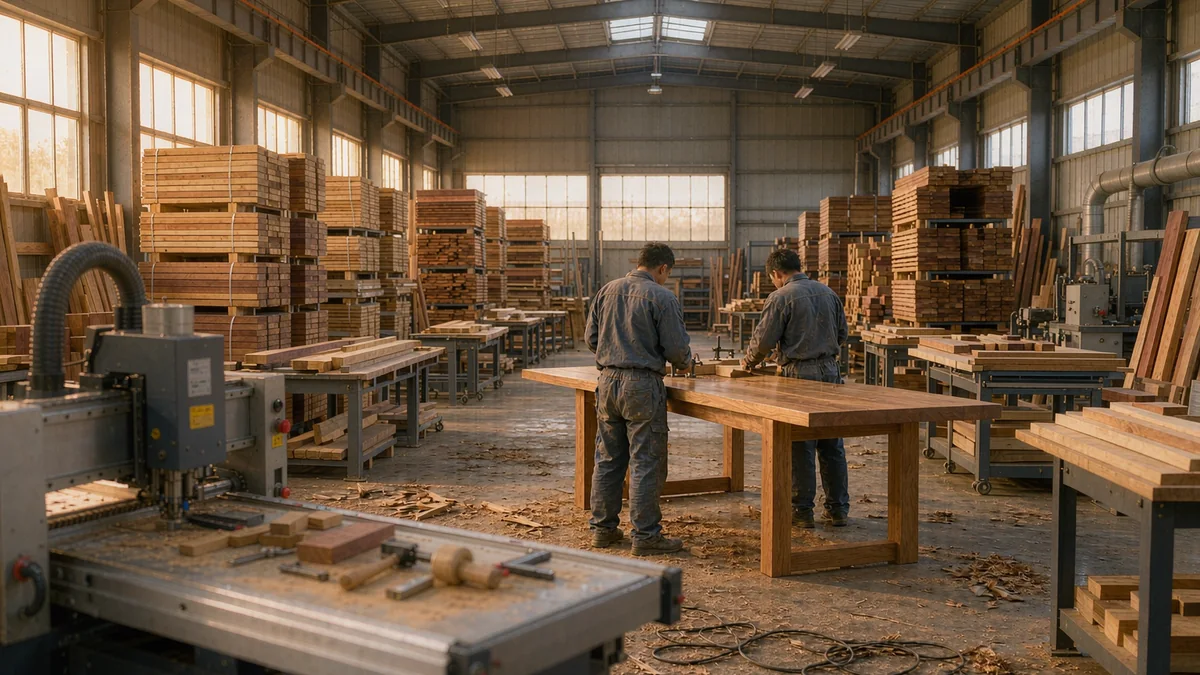
The craft depth is old, too: Qingdao Yimu, founded in 1953, remains one of the industry’s recognised time-honoured enterprises. Our own factory has been part of this cluster since 2008 — 15,000 m² of solid wood production, FSC-certified material, BSCI-audited processes, shipping to more than 40 countries.
How Do Materials Differ Across a Solid Wood Range?
Species choice is the single biggest driver of price, tone and durability in a solid wood range — and a well-built catalogue is organised around species, not around the word “wood”. Species is one axis; the other is the panel type — see what furniture is actually made of for how boards from solid lumber to MDF are made and how they compare.
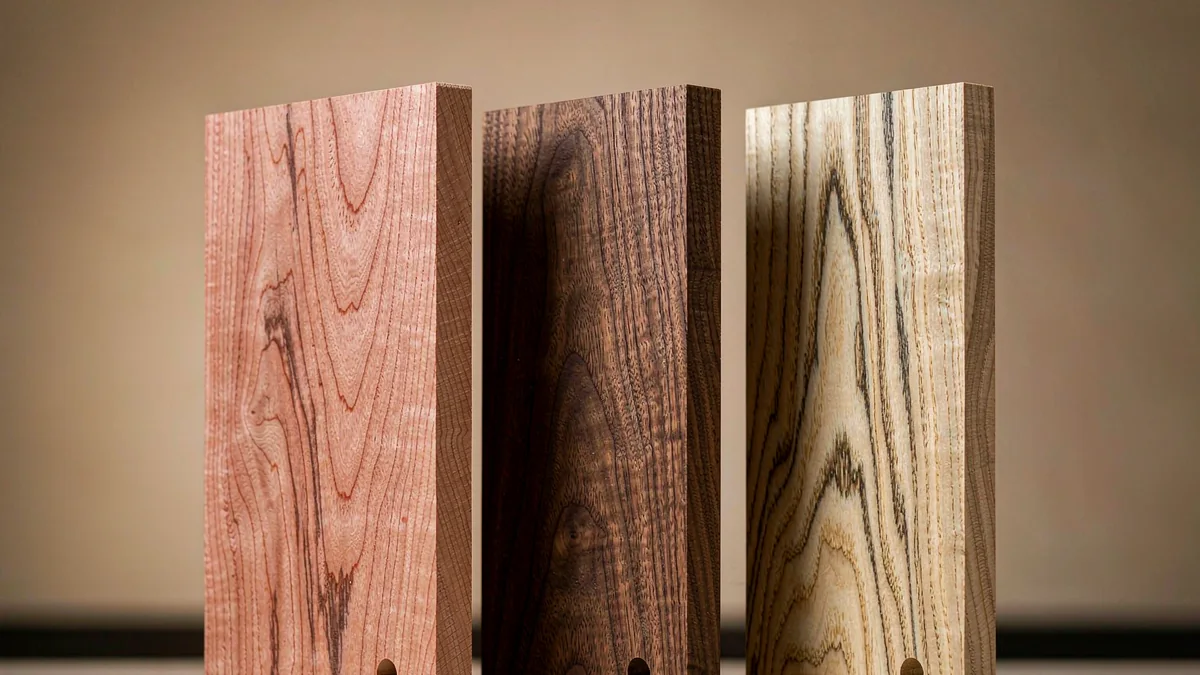
Our own range follows exactly this logic:
- Red oak — the value workhorse (562 SKUs). Open, pronounced grain with a warm honey tone; hard, durable and even-staining. It is the backbone of our dining and bedroom programmes at a mid-range price point — see the Laina platform bed and the Denmark dining table.
- Black walnut — the premium statement (217 SKUs). A deep chocolate tone with a finer, flowing grain. It costs more per board and earns it: beds, chairs and case goods where the material itself is the design — like the Accent Chair (B506E), where the walnut carries the whole silhouette.
- White ash — the light Nordic tone (26 SKUs). Pale, bold-grained and exceptionally tough, which also makes it a natural frame wood for seating — the Fangao range runs it through pieces like this dining chair.
- White oak — the quiet neutral (9 SKUs). A lighter, greyer take on oak with a more closed grain and better moisture behaviour; used selectively where a pale, calm surface leads the design, like the Laina nightstand.
- Mixed-material accents. Rattan, sintered stone tops, linen upholstery and metal frames appear as accents — chosen for a specific piece’s usage, never as a hidden substitution for solid wood.
One caution: the species name is only half of the material story. The grade of the lumber (for example FAS versus lower grades) and the kiln-dried moisture content matter just as much to how a piece performs in your market. A quotation that names the species but not the grade has not actually named the material.
How Do Styles Differ — and Which Market Does Each Fit?
Style determines market fit more than species does: two factories can work the same oak and produce furniture for completely different customers.
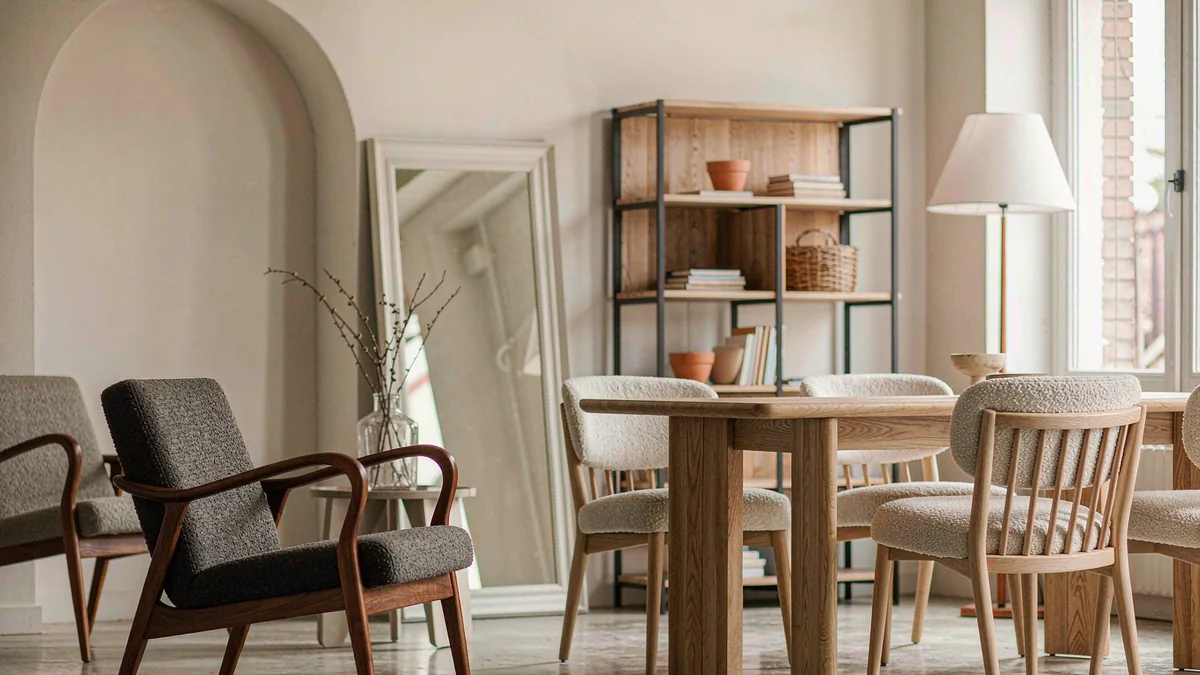
- Mid-century modern. Tapered legs, warm walnut and oak, compact proportions — the default for North American and Australian living and dining rooms. See the Accent Chair (L7121), a walnut accent chair with clean mid-century proportions.
- Nordic / Scandinavian. Pale oak and ash, clean lines, light textiles — the lead style for European and Australian interiors. The Fangao dining table in pale ash sits squarely here.
- Industrial. Solid wood with black metal framing — urban apartments, cafés and home offices, where the contrast between the two materials does the styling.
- Classic / traditional. Turned legs and heritage silhouettes — hospitality projects and traditional-leaning markets.
- Upholstered comfort. Solid frames carrying fabric seats and cushions — the living-room volume drivers. The Banxia sofa pairs a solid oak frame with loose cushions.
- Executive home office. Desks and storage engineered for daily professional use, like the Denmark desk.
Notice how style and species pair naturally: mid-century leans on walnut’s depth, Nordic on ash and white oak’s pallor, classic on oak’s ability to take turned detail. When a supplier shows you a style you want in a species that does not normally carry it, ask why — the answer is usually cost engineering, and it will show up somewhere in the piece.
What Should You Ask a Supplier Before Choosing a Region and Material?
Ask where the factory actually sits, what species and grade it buys, and what moisture content it dries to for your destination climate — before you compare quotations.
Six questions that separate a cluster specialist from a trader with a brochure:
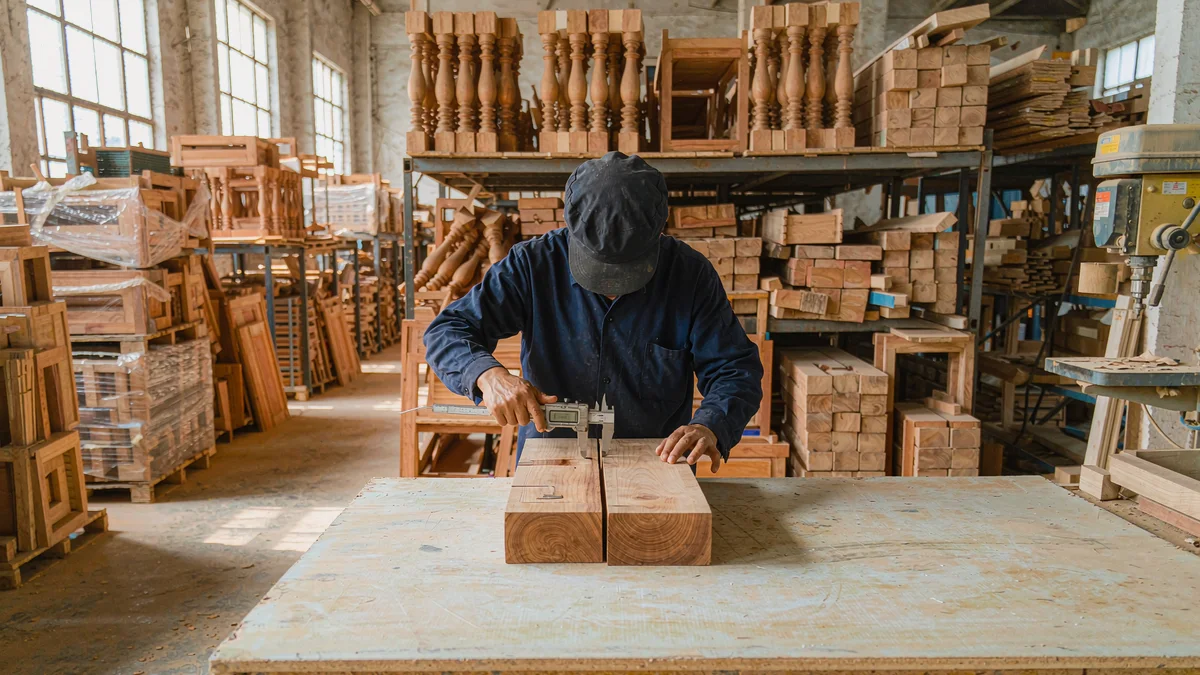
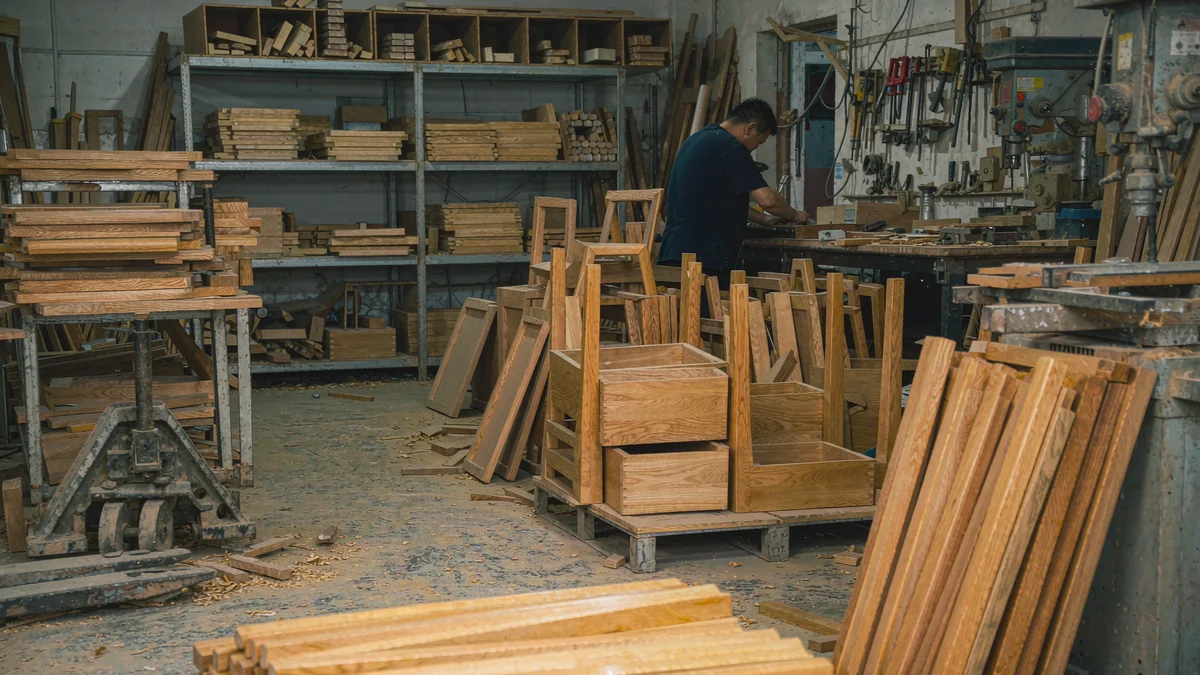
- Which town or district is production in? A Qingdao solid wood factory and a Foshan upholstery factory can both be honest answers — to different enquiries. Ask for a live video walkthrough of the actual workshop, not a showreel.
- Which species and grade, in writing? Species name, lumber grade, and an explicit clause that substitutions require written approval.
- What moisture content do you kiln-dry to, and for which destination climate? Expect a target in the 8–12% range for most export markets, with meter readings recorded per batch.
- What is the finish recipe and colour tolerance? Stain code, sanding sequence, topcoat specification, and an acceptable colour range checked under a standard light source.
- Which certifications can you evidence? FSC chain of custody for material origin and a current BSCI audit for working conditions are the baseline for most Western retailers.
- Which port do you ship from, and what does the inland leg cost? A factory hours from its export port saves real money and schedule risk on every container.
Region, material and style are three different decisions — and the suppliers worth working with are the ones who can show you, specifically, how all three connect in their own production. A fourth decision sits upstream of all of them: whether you are buying the factory’s design or asking it to build yours. That choice changes who pays for development and who owns the result — see OEM vs ODM furniture.
Frequently Asked Questions
Is furniture made in Foshan better quality than furniture from other regions?
Not inherently. Foshan is the largest trading and manufacturing hub, which means the widest supplier choice and the fastest sample turnaround — especially for upholstered and panel furniture. But quality is determined by the individual factory's process control, material grade and QC system, not by the city on the invoice. A well-run solid wood factory in Qingdao with kiln drying, written tolerances and AQL inspection will outperform a poorly managed workshop anywhere. Use the region as a starting filter for what a cluster is economically good at, then audit the factory itself.
Why is Qingdao known for solid wood furniture?
Three structural reasons. First, logistics: Qingdao is one of China's major gateways for imported hardwood logs, with professional timber distribution yards next to the factory districts, which keeps raw material stable and affordable. Second, climate: sitting at about 36°N, Qingdao's temperature and humidity range suits long-term timber storage and helps reduce cracking and warping before production even starts. Third, density of craft: producers concentrate in Jiaozhou, Chengyang and Jimo, and Jiaozhou alone counted more than 1,200 registered home-furnishing companies in 2022, over 600 of them manufacturers. The China National Furniture Association has designated Jiaoxi Town in Jiaozhou as a 'China Northern Furniture Export Industry Base'.
Which wood should I choose — red oak, black walnut or ash?
Choose by tone, budget and usage. Red oak has an open, pronounced grain and a warm honey tone; it is hard, durable and stains evenly, which makes it the value workhorse for dining and bedroom ranges. Black walnut carries a deep chocolate tone and a finer grain; it costs more and suits premium statement pieces. White ash is pale with a bold grain and excellent toughness, ideal for Nordic-style ranges and for upholstered frames. White oak sits between oak and ash in tone with a more closed grain and better moisture resistance. Within one species, grade and moisture content matter as much as the species name — put both in the specification.
Does the manufacturing region affect shipping cost and lead time?
Yes, materially. A factory's distance to its export port affects inland trucking cost and schedule risk: Qingdao factories truck finished containers to the Port of Qingdao in hours, while an inland cluster adds a full day or more of road freight per container. Port choice also shapes sailing frequency and transit time to your market. For full-container solid wood orders, ask the supplier to quote the inland leg separately so you can compare true landed cost across regions instead of comparing ex-works prices.
How can I verify a factory is really located where it claims?
Ask for the registered business licence address and compare it with the production address they quote — they are sometimes different, which matters for audits. Then request a live video walkthrough of the specific workshop, not a edited showreel, and check whether the machinery, timber stock and workforce match the capacity they claim. For serious volumes, commission a third-party on-site audit before the deposit. A factory that resists a live video call of its own production floor has answered your question already.
What moisture content should export solid wood furniture be dried to?
For most export markets in North America, Europe and Australia, 8–12% moisture content is the working target, tuned to the destination climate — drier for heated North American and northern European interiors, slightly higher for humid coastal regions. What matters more than the number is control: kiln-dried lumber, meter readings recorded per batch, and a factory that acclimatises components before assembly. Ask for the moisture readings to be included in the inspection report, not just promised.
Sources & References
Get a furniture quote
Sourcing solid wood furniture for your market? Send us your drawings, target quantities, and destination port — we will reply with pricing, MOQ, and lead time.