Why Doesn't an Approved Sample Guarantee Your Production Order?
An approved sample proves a design can be made once. It does not prove a supplier can repeat it across hundreds of units at the same material, finish, dimension and structure.

On this page
- Why Doesn’t an Approved Sample Guarantee a Perfect Bulk Order?
- What Changes Between the Sample and Mass Production?
- How Do Materials Get Substituted After Sample Approval?
- Why Does Colour and Finish Drift Across Batches?
- How Do Dimensions and Structure Slip During Volume Runs?
- What Is Batch-to-Batch Consistency and Why Does It Matter?
- How Can Buyers Protect Themselves Before Production Ships?
- When Should an Approved Sample Make You Walk Away?
- Ready to Turn the Sample Into a Repeatable Specification?
An approved sample is the most misunderstood object in furniture sourcing. A buyer sees a perfect chair, table or bed and assumes it is a promise. A factory sees the same object and assumes it is a target that can move under pressure. The truth is simpler: a sample proves that a design can be made once. It says almost nothing about whether the same design can be made three hundred times.
This guide sets out the five gaps that open between sample and mass production, why each one is normal, and what to put in writing before the deposit clears. The goal is not to make the factory perfect. It is to make the next argument unnecessary.
Why Doesn’t an Approved Sample Guarantee a Perfect Bulk Order?
The short answer is that a sample is made under ideal conditions, by one operator, from a hand-selected piece of material, with no production pressure — and none of that is true for the bulk run. The sample’s job is to confirm design direction and finish intent. It is not a guarantee of repeatability.
Reliability is a property of the process, not the product. When a buyer evaluates a supplier, the sample answers one question: “Can you make this?” The bulk order answers a different question: “Can you make this again, consistently, while the material changes, the operator changes, the weather changes, and the deadline tightens?” Most disputes start when a buyer treats the first answer as proof of the second.
What Changes Between the Sample and Mass Production?
Five things change the moment the order scales, and each one is a source of drift:
- Material. The sample is cut from a board chosen for colour and grain. The bulk run uses whatever the yard delivers that week.
- Finish. The sample is sprayed by one finisher in controlled light. The batch is sprayed across shifts, booths and humidity levels.
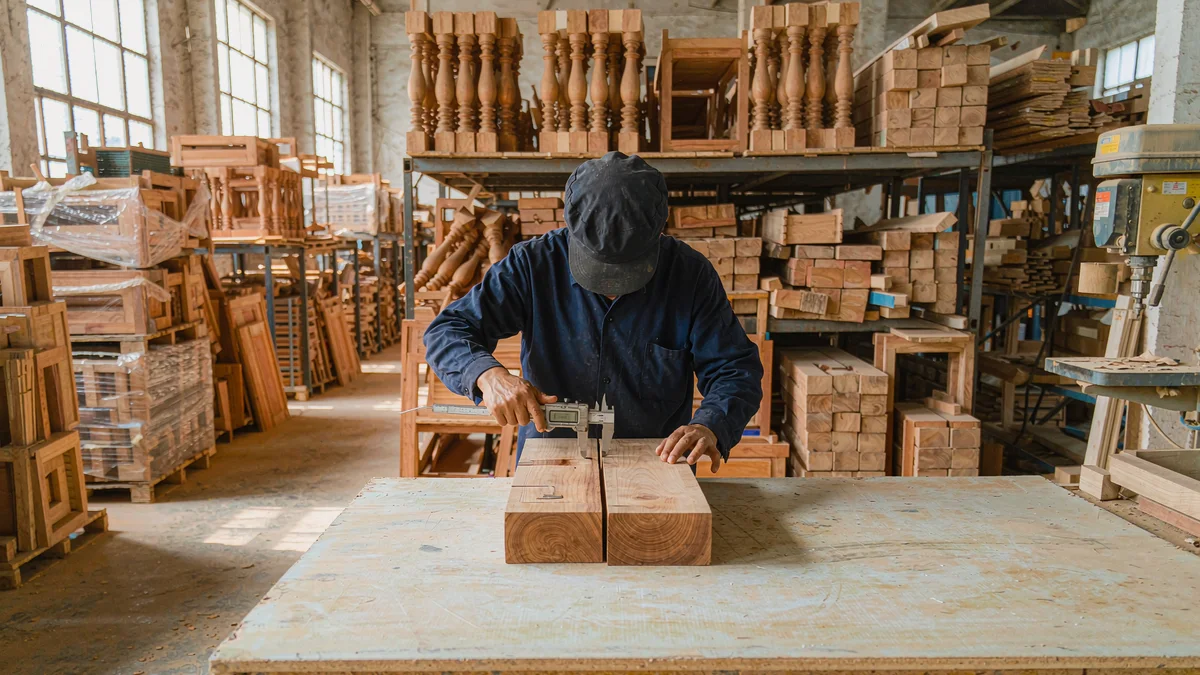
- Dimension. The sample is shaped by hand until it fits. The batch is cut to tolerance by jigs that wear and operators who rush.
- Structure. A hand-fitted joint looks perfect. Joints made at speed need explicit tolerances and checks.
- Batch consistency. Run one is made in March from kiln-dried timber stored over winter. Run two is made in July from timber that arrived last week.
These gaps are not defects in the factory’s honesty. They are the natural behaviour of wood, people and production systems. The problem arises only when nobody writes down what “acceptable” means.
How Do Materials Get Substituted After Sample Approval?
Materials get substituted whenever the original species or grade is unavailable, more expensive, or simply easier to buy — and the purchase order does not explicitly forbid it. The factory is not usually trying to cheat you. It is trying to keep production moving.
Common substitutions we see in solid wood furniture include:
- A lower grade of the same species, sold at the same price.
- An engineered core or plywood substrate where solid timber was specified.
- A veneer face on a part the drawing called solid.
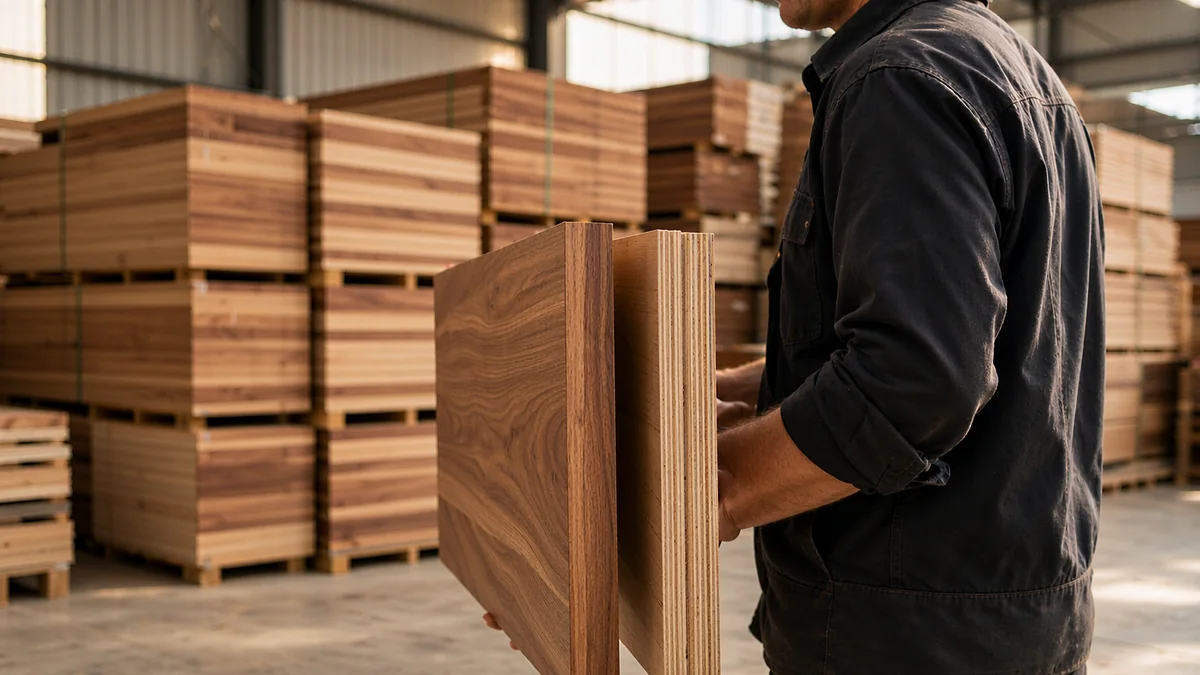
The fastest check is the cut edge: plywood shows layers, MDF shows a smooth homogeneous core, particleboard shows chips. See how to identify furniture panels for the full comparison, including plywood vs MDF vs particleboard.
- A related species from the same family, “close enough” visually but different in density and behaviour.
The countermeasure is to write the material specification into the order, not into a conversation. Name the species, the grade standard, the cut, and any prohibited substitutions. For parts that could be veneered or engineered, state the core material and minimum veneer thickness. Then seal a sample of the actual material on the floor, because the edge of a board tells the truth faster than a certificate.
Why Does Colour and Finish Drift Across Batches?
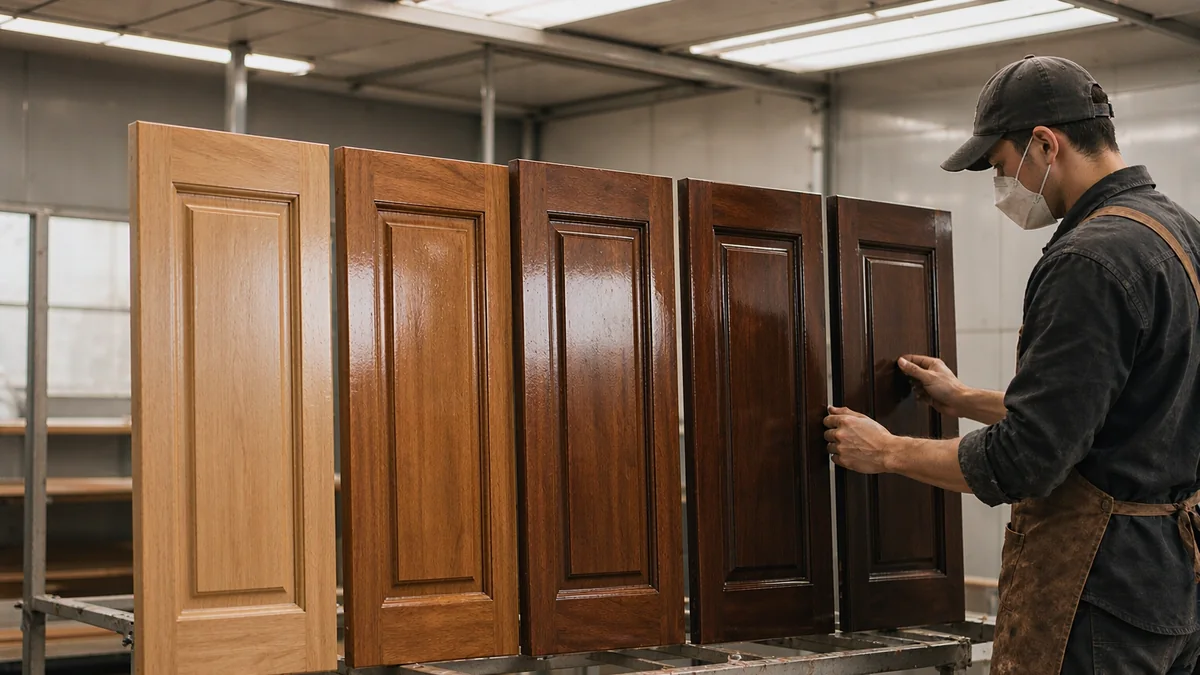
Finish drift is not a failure of skill. It is a failure of specification. Colour, sheen and texture are sensitive to operator, booth temperature, humidity, sanding grit, stain lot and topcoat viscosity. A sample sprayed by one senior finisher on a quiet afternoon will almost always look different from a batch sprayed across three shifts by different people.
The protection is to convert the sample into a written recipe. A good finish specification names:
- the stain or dye code, including the supplier and lot range;
- the sanding sequence and final grit;
- the topcoat type, sheen level and film thickness;
- drying time and booth temperature range;
- the acceptable colour range under a standard light source.
Keep a sealed master panel on the floor, not just a photograph. A panel lets an inspector place the production piece next to it under the same light and decide whether the difference is within range or outside it. Without that reference, “close enough” becomes a moving target.
How Do Dimensions and Structure Slip During Volume Runs?
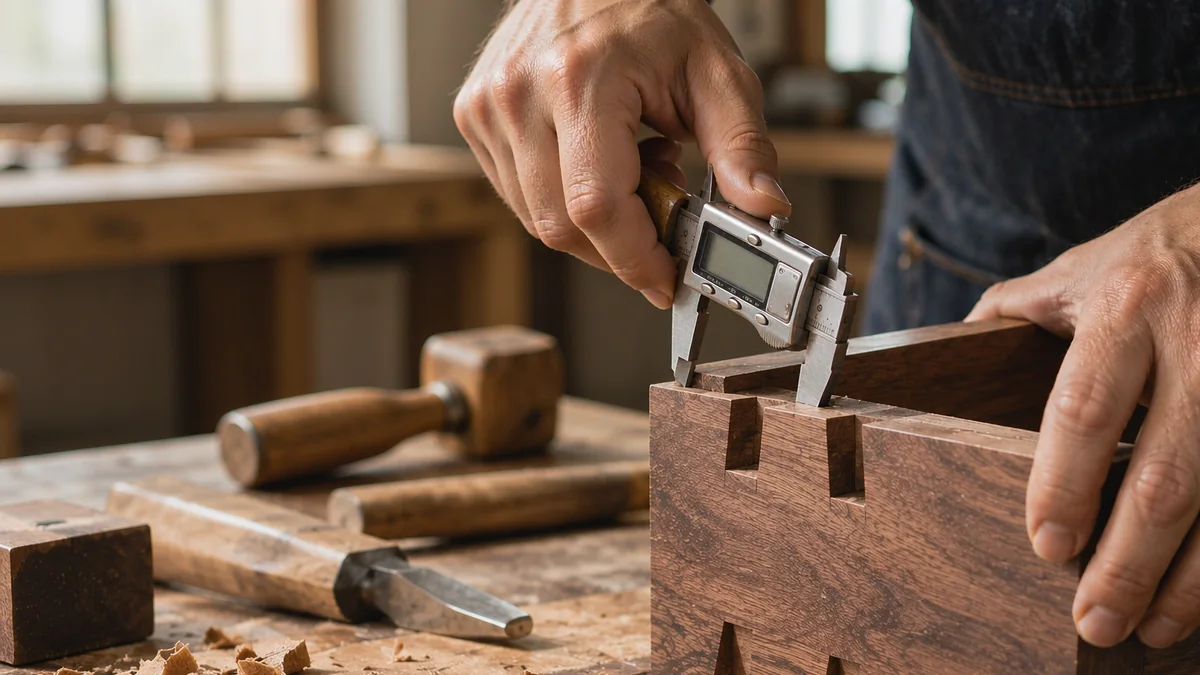
Jigs wear, operators rush, and solid wood moves with humidity. Without stated tolerances and mid-production checks, joints open, drawer gaps widen, and table tops lose flatness. The sample, shaped by hand until it fits perfectly, hides these risks because it was never made under volume pressure.
A practical specification names tolerances and measurement points:
- Overall length, width and height within ±2 mm for case goods.
- Visible joint gaps within ±1 mm.
- Drawer side-to-side play within a stated range.
- Table-top flatness checked with a straightedge at defined points.
- Squareness of corners and frames measured on the first ten units.
The first units off the line are the most valuable. Inspect them, not the last. The first pieces reveal whether the tooling was translated correctly from the sample. Correcting a setup at unit ten is a morning’s rework. Correcting it at the port is a claim.
What Is Batch-to-Batch Consistency and Why Does It Matter?
Batch-to-batch consistency means the next production run looks like the previous one. It matters because many buyers place a first order, approve it, and then reorder months later assuming the result will be identical. It rarely is.
Seasonal timber, different kiln charges, new finish lots and a different crew all move the result. The only way to keep runs aligned is to keep a production record alongside the sample: the material lot, the finish recipe, the tolerance checklist, and the approved reference photographs from the first run. A golden sample held on the floor is useful, but a golden sample plus a written recipe is what makes reordering predictable.
How Can Buyers Protect Themselves Before Production Ships?
The practical answer is to move controls from the sample into the contract and then verify them on the floor. Six items make the difference between a claim and a confirmation:
- Written specifications. Name species, grade, finish code, tolerances, hardware part numbers, and packaging in the purchase order. If you are developing your own design rather than adapting an existing one, the ownership clauses matter just as much — see OEM vs ODM furniture.
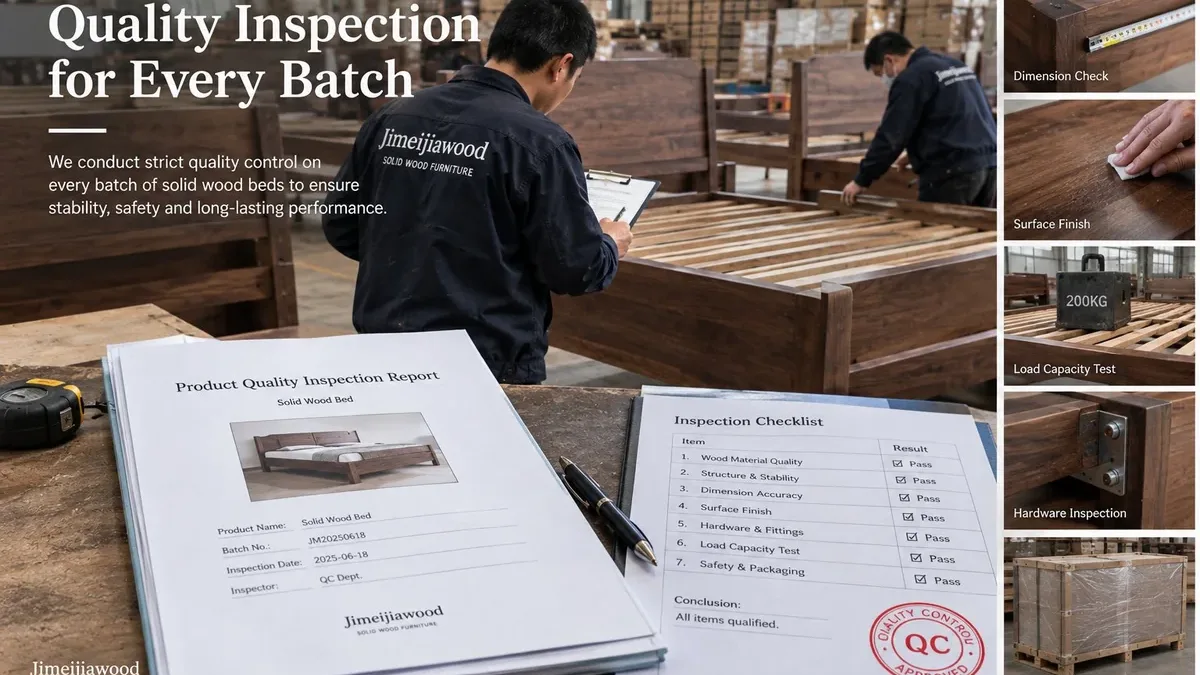
- A retained sample on the floor. Signed, sealed, and used as the physical reference for mid-production and pre-shipment checks.
- A mid-production inspection. Check the first ten to fifteen units against the sample while the setup can still be corrected.
- An AQL-based pre-shipment inspection. Use an independent inspector working from your checklist and the retained sample.
- Photographs of the actual batch. Dated, with the sample visible in frame, so disputes are settled by evidence.
- A change-control clause. Any material or finish substitution must be documented and re-approved before it is used.
None of this is unusual. A factory that runs these steps will not be uncomfortable writing them down. A factory that resists is telling you what the first container would have taught you.

When Should an Approved Sample Make You Walk Away?
Walk away when the supplier cannot explain how the sample will be reproduced. Red flags are easy to spot once you know what they mean:
- “The sample was made by our best worker” — a sign that the process is not repeatable.
- “Just trust us, we will match it” — a refusal to put repeatability in writing.
- No retained sample policy, or a willingness to ship without one.
- No inspection report tied to your purchase order.
- Resistance to a mid-production check or third-party inspection.
The sample is a test of the supplier’s process, not just the product. A supplier who understands consistency will already have the answers. A supplier who treats the sample as a one-off is telling you that every order is a gamble.
Ready to Turn the Sample Into a Repeatable Specification?
An approved sample is a starting point, not a guarantee. The controls around it — written specifications, a retained reference, mid-production checks, and independent inspection — are what turn a good sample into a reliable bulk order.
Viewed across several suppliers rather than one, those same controls become a comparison method: How Do You Compare Furniture Suppliers Before You Commit? scores consistency, quality evidence and process ownership side by side, and confirms the winner with a small pilot order.
If you would like the Jimeijia sourcing team to review your current specification or to run a mid-production inspection against your approved sample, reach out through WhatsApp or email and we will walk through the checklist line by line.
Frequently Asked Questions
Can a factory legally change materials after sample approval?
Only if the contract allows it. Most purchase orders are silent on material grade and species, which gives the factory room to adjust to availability or cost. Put the timber species, grade, cut and any prohibited substitutions in writing, and require written approval for any change. For veneered or multi-layer parts, name the core material and the minimum veneer thickness. A signed sample held on the floor is also a physical contract: if the production board does not look like the sample at the edge, the change is visible.
Why does the same finish look different on the production batch?
Finish is a chemical and environmental process. Operator technique, booth temperature, humidity, sanding grit, stain lot and topcoat viscosity all affect the final shade and sheen. A sample sprayed by one senior finisher in ideal conditions will almost always look different from a batch sprayed across shifts. The fix is to write a finish recipe — stain code, sanding sequence, topcoat spec, drying time — and define an acceptable colour range under a standard light source. Keep a sealed master panel on the floor so operators compare the batch against an object, not against memory.
How much dimensional variation is normal in solid wood furniture?
For case goods, ±2 mm on overall dimensions and ±1 mm on visible joint gaps is common in factory-grade solid wood. Anything wider should be named in the tolerance clause of the order. Solid wood also moves with humidity, so dimensions should be checked after the piece has acclimatised in the workshop for at least 48 hours. The critical dimensions are squareness, joint gaps, drawer and door fit, and table-top flatness. Tolerances without measurement points — 'as per sample' alone — leave the argument to interpretation.
Should I keep the approved sample or leave it at the factory?
Leave it at the factory as a sealed, signed production reference. A physical sample on the floor settles most disputes before they become arguments: the inspector can place the production piece next to it under the same light and compare colour, grain, sheen and proportion. Photographs are useful for records, but they distort colour and scale and are easy to reinterpret when the factory is under pressure. If you keep a duplicate in your office, mark it clearly as the master and make sure the factory copy carries identical labels and signatures. At the scale of a multi-item project, the same discipline becomes checking every line against the order list — our [restaurant furniture sourcing case study](/blog/restaurant-furniture-sourcing-case-study/) shows what that looks like across 20+ items.
What is the cheapest way to reduce sample-to-production risk?
Add one mid-production inspection against the approved sample for the first order. It costs a fraction of a container of freight and surfaces problems while rework is still possible. Ask the inspector to check the first ten to fifteen units off the line, not the last. The first units reveal whether jigs, tooling and finish setup were translated correctly from the sample. Correcting ten pieces is a morning's work; correcting a loaded container is a claim.
Does ISO 9001 prevent sample-to-bulk drift?
No. ISO 9001 certifies that a documented quality management system exists, not that every batch follows it. A certified factory can still ship a batch that drifts from the approved sample if the buyer's specification was never written into the production record. Ask for the inspection report and production traveller tied to your purchase order number, and check that the approved sample reference is recorded on it. Certification raises the floor on process discipline; your written specification raises the floor on what the product must be.
Sources & References
Get a furniture quote
Sourcing solid wood furniture for your market? Send us your drawings, target quantities, and destination port — we will reply with pricing, MOQ, and lead time.